 EN
EN

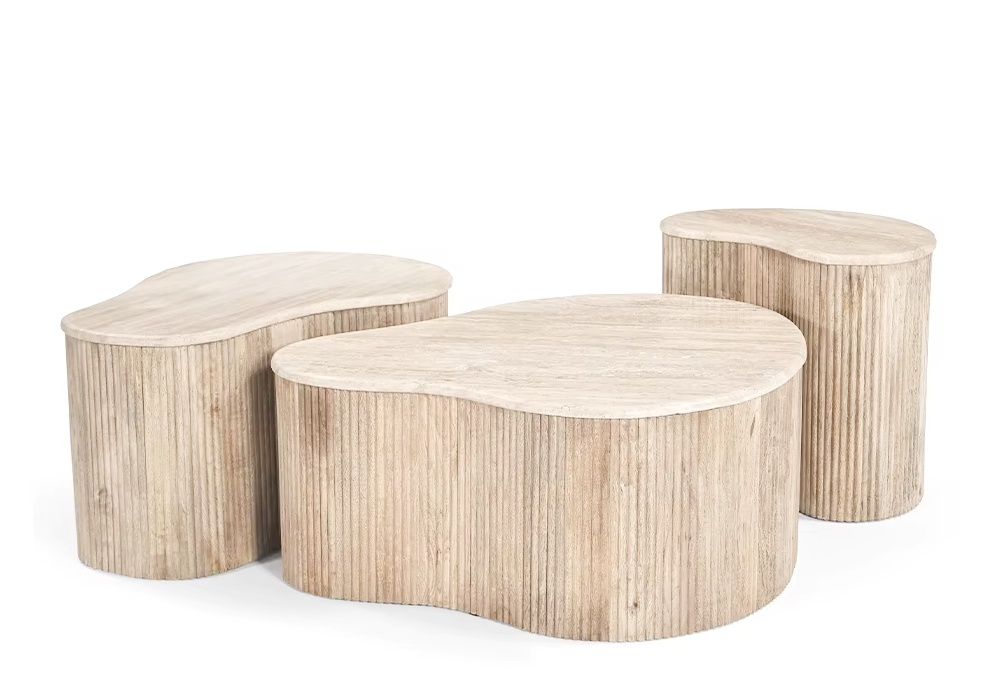
Superior Durability and Long-Term Structural Integrity
Compression strength and resistance to micro‑fractures under daily use
Travertine’s naturally high compressive strength—typically around 50 MPa, compared to just 5–15 MPa for hardwoods like oak or maple (Materials Handbook 2022)—makes it exceptionally resistant to the micro-fractures that develop from repeated impacts, such as placing a heavy cast-iron pan or ceramic dish. Its dense calcite structure does not soften or form hairline cracks over time, preserving surface integrity without gradual degradation. Load-bearing tests confirm that a well-supported travertine slab withstands over 200 kg of static weight without permanent deformation, while wooden tables of equal thickness often dent at half that load. The stone’s granular matrix evenly distributes stress, so everyday incidents—like a dropped utensil or toy—rarely leave marks. Because micro-fractures do not propagate, the table retains its original shape and structural strength for decades, eliminating early replacement or reinforcement.
How travertine avoids grain fatigue, warping, and seasonal expansion—common wood limitations
Wood is vulnerable to grain fatigue: repeated loading weakens internal fibers, leading to visible sagging or cracking. Humidity fluctuations compound this—wood expands or contracts by ~0.2% for every 1% change in moisture content, causing cupping, twisting, or joint gaps across seasons (Forest Products Journal 2021). Travertine faces none of these issues. Its non-fibrous, crystalline calcite structure neither absorbs moisture nor responds to ambient humidity shifts, remaining dimensionally stable from 30% to 80% relative humidity. There is no annual swelling/shrinking cycle to stress joinery, and no directional grain to fail under load. As a result, the surface stays flat and level without climate control or fastener re-tightening—preserving both aesthetics and functional reliability far more predictably than wood.
Exceptional Heat and Thermal Shock Resistance
Travertine’s ability to safely handle hot cookware and beverage condensation without damage
Travertine excels where wood falters: thermal performance. Unlike wood—which can scorch, warp, or ignite when exposed to heat—a dense travertine surface remains unaffected by cookware up to 350°C. Its high thermal mass absorbs heat gradually, preventing sudden temperature spikes that cause thermal shock. You can place a hot pan directly from the stove onto a sealed travertine table without trivets. Even abrupt temperature changes—like setting a frozen dish on a warm surface—won’t induce cracking. For beverage condensation, proper sealing ensures moisture beads up and wipes away cleanly, eliminating white rings or water stains. Wood, by contrast, requires constant vigilance and coasters to avoid permanent marking. With just one annual seal, travertine maintains resilience against both thermal and moisture-related wear—offering practical peace of mind for families and frequent entertainers.
Real-World Stain, Scratch, and Etch Performance
Daily life presents a gauntlet of spills and impacts that rapidly degrade many dining surfaces. When properly sealed, travertine delivers fundamentally stronger resistance than even the most heavily lacquered solid wood tables.
Sealed travertine vs. hardwood: side-by-side spill resistance (wine, citrus, olive oil)
Material porosity and chemical reactivity determine real-world spill outcomes. A direct comparison reveals why sealed travertine performs more reliably:
| Spill Type | Sealed Travertine Performance | Hardwood (e.g., Oak) Performance |
|---|---|---|
| Red Wine | Liquid beads on the surface; prompt wiping leaves no trace. The non-porous seal prevents pigment absorption. | Tannins penetrate wood fibers within minutes, often causing dark, permanent stains—even on finished surfaces. |
| Citrus Juice | A modern penetrating sealer resists mild acid, preventing dull etch marks common with unsealed stone. | Acid instantly clouds or strips the finish, frequently requiring professional refinishing to restore sheen. |
| Olive Oil | Wipes away cleanly—no greasy residue—because the seal blocks capillary action into the stone’s pores. | Deeply penetrates the grain, creating persistent oily spots that attract dust and are difficult to remove. |
This imperviousness extends to physical durability. While a dropped pan can gouge softer wood fibers, travertine’s hardness and compressive strength (Natural Stone Institute 2023) resist scratches and impact damage—maintaining surface integrity year after year.
Simplified, Low-Frequency Maintenance for Busy Households
Annual sealing, pH-neutral cleaning, and avoiding acid exposure—versus wood’s refinishing, polishing, and humidity control
Travertine offers a refreshingly low-maintenance alternative to wood—ideal for time-constrained households. Core upkeep is simple and predictable: apply a penetrating sealer once per year, clean regularly with a pH-neutral cleaner, and avoid prolonged contact with strong acids like vinegar or undiluted lemon juice. This minimal routine prevents staining and etching without specialized tools or recurring labor.
Wood demands significantly more attention: refinishing every 2–5 years involves sanding, staining, and multiple varnish coats; daily care includes dusting and periodic waxing or oiling; and environmental control—maintaining 40–55% relative humidity—is essential to prevent warping or joint failure.
| Maintenance Aspect | Travertine Table | Wooden Table |
|---|---|---|
| Sealing / Finishing | Annual application of a penetrating sealer; no sanding or stripping required. | Refinishing every 2–5 years involving sanding, staining, and multiple coats of varnish. |
| Daily Cleaning | Quick wipe with a pH-neutral cleaner; no waxing or polishing needed. | Regular dusting and occasional polishing to prevent dullness and dryness. |
| Spill Response | Prompt blotting suffices; sealed surface resists most liquids except strong acids. | Immediate cleanup is mandatory—prolonged moisture causes staining, swelling, or grain lifting. |
| Environmental Control | Stable across normal indoor humidity levels (30–80% RH); no adjustments needed. | Requires consistent humidity (40–55%) to avoid expansion, contraction, and joint cracking. |
This streamlined regimen translates into true hands-off reliability. While wood demands ongoing vigilance against scratches, moisture, and seasonal shifts, a sealed travertine table stays beautiful with just minutes of weekly care—and one brief annual sealing session. The result is a durable, elegant dining surface that supports simplified, confident living.
FAQs About Travertine Tables
How often do I need to seal a travertine table?
You only need to seal a travertine table annually to maintain its resistance to stains, etching, and moisture absorption.
Can travertine tables be damaged by heat?
No. Travertine can handle heat up to 350°C, making it ideal for placing hot cookware directly on its surface without risk of damage.
Is travertine prone to cracking in seasonal climates?
No, travertine is dimensionally stable and doesn’t expand or contract with humidity fluctuations, unlike wood.
How easy is it to clean travertine compared to wood?
Travertine is extremely easy to clean—just wipe with a pH-neutral cleaner. Wood requires more frequent polishing, sanding, and waxing.
Does travertine resist scratches and stains over time?
Yes, a properly sealed travertine table resists scratches, stains, and daily spills far better than wooden tables.