 EN
EN

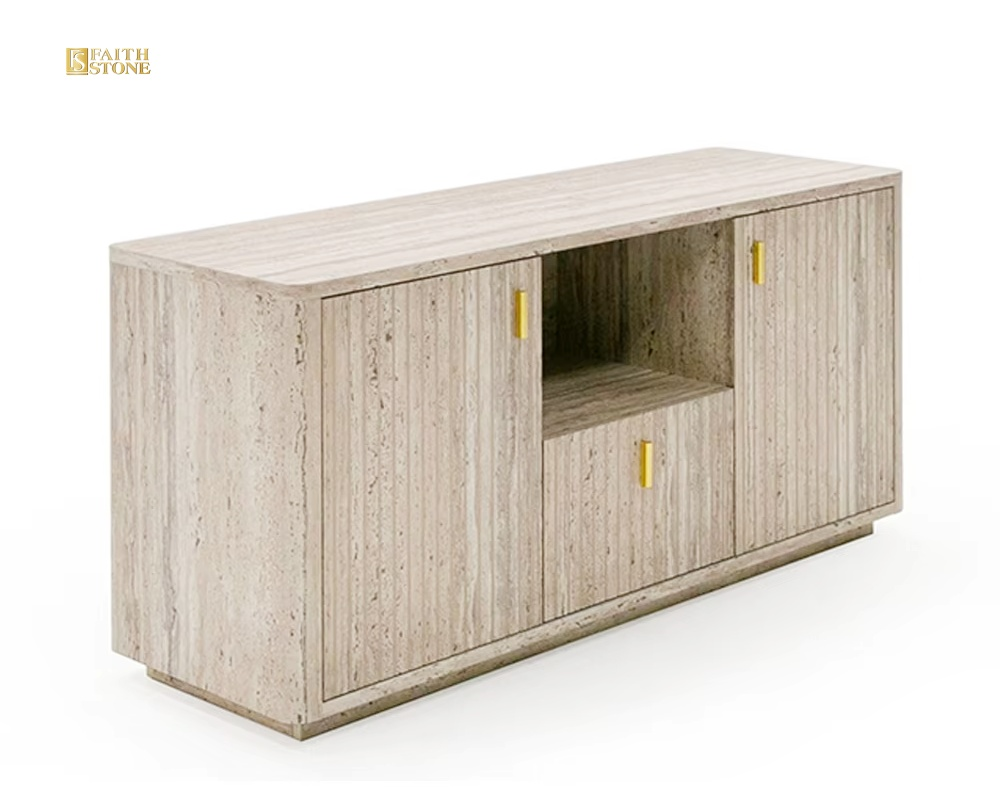
Structural Durability of Travertine Tables in High-Traffic Family Homes
Compressive strength and load-bearing capacity under daily use (e.g., dining, homework, crafts)
Travertine’s compressive strength—typically 35 to 55 MPa (Natural Stone Institute 2023)—makes it exceptionally capable for family life. A standard 2‑cm‑thick tabletop, when properly supported, easily bears distributed loads exceeding 200 kg: enough for dinner service, stacked textbooks, craft supplies, or even a child’s playful climb. This robustness stems from travertine’s dense, concretionary formation in mineral-rich springs—a geologic trait that gives it load-bearing performance comparable to many granites. With a well-engineered under-frame, the table remains rigid and level, delivering consistent stability through holiday meals, homework marathons, and spontaneous art sessions.
Real-world longevity: Observed wear patterns in travertine tables after 3+ years of family use
After three or more years of active family use, travertine tables rarely show structural compromise—but they do develop a distinctive, gentle patina. Homeowner surveys and showroom data consistently report surface honing in high-contact zones (like the center of a dining area), not cracking or sagging. Light etching from occasional citrus or wine spills may appear, but these marks often harmonize with the stone’s natural veining, enhancing its warm, lived-in character. Crucially, no cases of joint separation, edge crumbling, or frame fatigue have been documented when routine sealing is maintained. This graceful evolution—rather than deterioration—is a hallmark of travertine’s authentic durability, transforming the table into both a functional anchor and a cherished heirloom.
Impact and Scratch Resistance of Travertine Tables
Mohs hardness (3–4) implications: How utensils, toys, and accidental drops affect surface integrity
With a Mohs hardness of 3–4, travertine is softer than steel cutlery (5.5) and quartz (7), meaning everyday contact can gradually dull or scratch its surface. A dropped ceramic mug, dragged toy car, or careless knife swipe may leave visible marks—especially on polished finishes. That said, this isn’t fragility; it’s sensitivity. Simple habits—using placemats, adding felt pads under decor, and avoiding sliding heavy objects—preserve surface integrity over time. While travertine won’t match engineered quartz for scratch resistance, it outperforms wood and glass in overall resilience. When paired with mindful use, it delivers enduring beauty without sacrificing practicality.
Edge and corner vulnerability: Chipping risks and ASTM-validated design or finishing mitigations
Edges and corners represent the most vulnerable points on a travertine table—prone to chipping from bumps, furniture shifts, or toddler-level collisions. ASTM C880 flexural strength testing confirms that sharp, square edges concentrate impact stress, increasing fracture risk. In contrast, rounded profiles—such as bullnose or 10‑mm radius edges—distribute force more evenly and significantly reduce chipping. Many manufacturers now reinforce edges with resin fillers and elastic sealants during fabrication, further improving impact tolerance. For homes with young children or pets, selecting a table with a factory-applied rounded edge is a proven, standards-aligned strategy: it preserves travertine’s organic aesthetic while delivering measurable gains in real-world durability.
Stain, Spill, and Heat Resistance for Active Family Living
Porosity challenge: 8–12% water absorption rate and real-time spill penetration (juice, wine, sauces)
Travertine’s porosity—measured at 8–12% water absorption per ASTM C97—is its primary vulnerability in busy households. Unsealed, the stone absorbs liquids rapidly: lab tests show a 5‑ml red wine drop forms a visible stain in under 30 seconds. Dark liquids like tomato sauce or grape juice penetrate deeply, often causing permanent discoloration; even clear apple juice can oxidize and yellow over time. Professional sealing closes capillary pathways, reducing absorption to below 1% and buying critical time—several minutes—to wipe spills before damage occurs. A honed-and-filled finish helps limit pore size, but no treatment eliminates porosity entirely. Prompt cleanup remains non-negotiable—even on sealed surfaces.
Thermal resilience: Performance under hot cookware and seasonal temperature fluctuations
Travertine handles everyday heat confidently, safely supporting cookware up to 150°C (300°F) without surface scorching. Placing a baking dish straight from the oven poses little immediate risk—though repeated exposure may degrade the sealer over time. The greater concern is thermal shock: sudden, extreme temperature shifts, such as setting a frozen plate onto a recently heated spot, can induce micro-cracks—particularly in thinner slabs. Seasonal fluctuations in unconditioned spaces (e.g., sunrooms) also pose mild expansion/contraction stress, though filled travertine paired with flexible sealants accommodates these changes effectively. Compared to wood or laminate, sealed travertine retains far more structural integrity under heat cycles—making it a reliable, year-round centerpiece for kitchens and dining areas.
Long-Term Maintenance and Sealing Strategies for Travertine Tables
Sealant comparison: Impregnators vs. topical sealers in resisting common household spills over 12 months
Given travertine’s 8–12% water absorption rate, sealing is essential—not optional—for family use. Impregnating sealers penetrate the stone, forming an invisible barrier within the pores that repels liquids without altering appearance or breathability. Over 12 months, they maintain strong resistance to juice, wine, and sauce spills when reapplied annually. Topical sealers, by contrast, sit on the surface—offering initial gloss but wearing unevenly under scrubbing, heat, and abrasion. Field observations show topical coatings degrading visibly within 6–9 months, exposing the stone to etching and staining. For families seeking low-maintenance protection that honors travertine’s natural texture and tone, impregnators are the authoritative choice: one annual application sustains performance, preserves aesthetics, and aligns with best practices endorsed by the Natural Stone Institute.
Frequently Asked Questions
What makes travertine tables suitable for high-traffic family homes?
Their compressive strength, typically 35-55 MPa, ensures they can withstand heavy loads from dining, homework, and crafts while staying stable and level.
How resistant is travertine to everyday wear and tear?
While it develops a patina over time, structural durability remains uncompromised if routine sealing is maintained. Surface wear aligns with the stone’s natural beauty.
Can travertine scratch easily?
Yes, it has a Mohs hardness of 3–4, meaning it’s softer than steel or quartz but more resilient than wood and glass. Simple preventative habits can avoid scratches.
How do edges and corners hold up in active households?
Rounded edges are less prone to chipping compared to square ones. Many manufacturers reinforce edges with resin fillers and elastic sealants for durability.
What maintenance is necessary for travertine tables?
Annual application of impregnating sealers is recommended to protect against spills and stains. Prompt spill cleanup is essential.
Are travertine tables heat-resistant?
Yes, they resist everyday heat confidently up to 150°C (300°F), but caution is needed regarding thermal shock from rapid temperature changes.
Table of Contents
- Structural Durability of Travertine Tables in High-Traffic Family Homes
- Impact and Scratch Resistance of Travertine Tables
- Stain, Spill, and Heat Resistance for Active Family Living
- Long-Term Maintenance and Sealing Strategies for Travertine Tables
-
Frequently Asked Questions
- What makes travertine tables suitable for high-traffic family homes?
- How resistant is travertine to everyday wear and tear?
- Can travertine scratch easily?
- How do edges and corners hold up in active households?
- What maintenance is necessary for travertine tables?
- Are travertine tables heat-resistant?