 EN

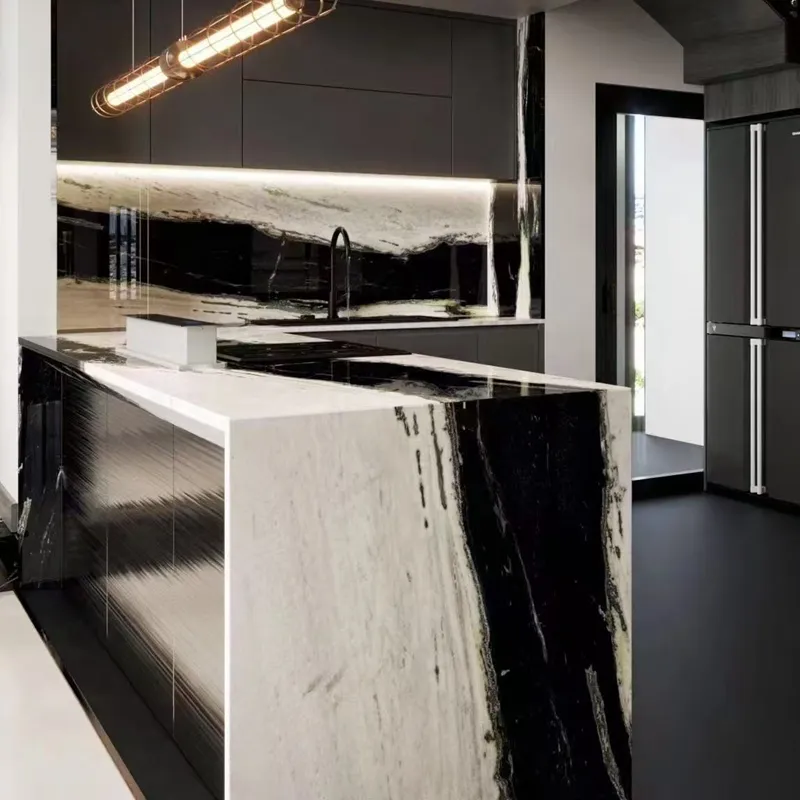
Timeless Elegance and Status Appeal of Marble Countertops
Marble as a heritage material repositioned for contemporary luxury
Marble’s story began in ancient quarries, where sculptors and architects prized its luminosity and cool, smooth surface. Today, a marble countertop channels that same lineage of craft and permanence into the kitchen. Unlike engineered alternatives, marble ages with grace—developing a soft patina that adds depth rather than looking worn. This natural metamorphosis transforms the surface from a new installation into a lived-in heirloom, telling the story of meals shared and time passed. Designers now reposition this heritage material for contemporary luxury by pairing it with minimal hardware, integrated sinks, and flush edges that let the stone’s intrinsic elegance command attention. Its subtle light-reflecting quality brightens workspaces, making even compact kitchens feel more open and calm. By marrying ancient prestige with modern sealing technology, marble offers both a daily work surface and a statement of refined taste—far from a passing trend, it stands as a quiet anchor of enduring value.
How natural veining and tonal variation reinforce uniqueness and authenticity
Every marble slab carries a one-of-a-kind signature: feathery grey veins sweeping across a white field, dramatic gold streaks, or deep charcoal currents against a black base. These patterns arise from mineral impurities and geological pressure over millennia, making duplication impossible. When a slab is cut, book-matched veining can create mirror-image splashes across a backsplash or island, turning the counter into a living canvas. This natural variation ensures no two kitchens ever feel exactly alike—reinforcing authenticity that factory-made materials cannot match. Subtle tonal shifts—from cool blue-greys to warm ivory—allow the stone to adapt seamlessly to both stark modern cabinets and traditional woodwork, always reading as genuine. Homeowners seeking character choose marble precisely because its imperfections are prized, not hidden. That tactile, visual uniqueness elevates a kitchen from functional to personal, affirming that the most sophisticated designs begin with materials that celebrate their origins.
Design Versatility: Marble Countertops Across Kitchen Aesthetics
Harmonizing with traditional, transitional, and minimalist cabinetry systems
A marble countertop serves as a unifying element across diverse kitchen styles—from ornate traditional settings to streamlined minimalist layouts. In classic kitchens, its natural luminosity softens the visual weight of dark, carved-wood cabinetry, creating balance between texture and reflection. For transitional designs that blend old and new, marble bridges the gap by pairing equally well with shaker-style doors and sleek, handle-less fronts. Minimalist interiors benefit from its subtle veining, which introduces organic movement without disrupting clean lines. Interior architects note that honed finishes enhance a matte, understated look, while polished surfaces amplify light in compact spaces. This adaptability stems from marble’s ability to complement both warm wood tones and cool, monochromatic palettes—ensuring the countertop remains a cohesive focal point, not a competing element. By selecting the appropriate edge profile and finish, the same material can evoke rustic charm or contemporary precision, eliminating the need for multiple surface types within a single home.
Color and veining selection guide: Calacatta, Statuario, and Nero Marquina in context
Choosing the right variety aligns marble countertops with the intended design language. Calacatta—defined by bold, thick grey veining on a bright white background—suits grand traditional or luxury transitional kitchens where statement surfaces are desired. Statuario features a more uniform white base with fine, feathery grey lines, lending itself to minimalist or contemporary spaces that favor subtle drama. For bolder contrast, Nero Marquina—a deep black stone with stark white veining—anchors modern interiors or creates striking focal points in light-filled, neutral kitchens. Designers often recommend using Nero Marquina on islands or perimeter counters to ground open-plan layouts, while white marbles expand visual boundaries in smaller rooms. Lighter varieties reflect up to 15% more ambient light than darker options, making them a practical tool for manipulating perceived room size. Pairing Statuario with pale oak cabinets achieves a serene, airy feel; Calacatta’s dramatic veins can echo walnut grain for a curated, high-end look.
Seamless Integration: How Integrated Marble Countertops Redefine Kitchen Flow
Flush mounting, zero-threshold edges, and invisible seams for unified visual continuity
Flush mounting eliminates the slight lip common in traditional countertop installation, creating a perfectly level surface from slab to cabinetry. This precision allows a marble countertop to appear as a single, uninterrupted plane—reinforcing flow across work zones. Zero-threshold edges remove the visual break between the counter and surrounding surfaces, so the stone seems to float without borders—ideal for open-concept layouts where the island functions as an architectural anchor. Invisible seams further enhance this effect: skilled fabricators match veining patterns and use translucent adhesives that make joints nearly imperceptible. The result is a continuous sweep of natural stone that draws the eye smoothly from the backsplash to the island edge. Such integration minimizes grout lines and crevices, simplifying maintenance while amplifying the perception of space. By unifying every surface junction, flush details and seamless joins elevate the kitchen into a calm, cohesive environment that underscores both luxury and functionality.
Marble Countertops as Architectural Anchors in Modern Home Design
A marble countertop naturally anchors a kitchen by establishing a powerful focal point around which the entire design orbits. Its distinctive veining and luminous surface command attention, drawing the eye and setting spatial hierarchy. Unlike ordinary work surfaces, a large-format marble slab acts as a sculptural centerpiece that defines the room’s volume—enabling designers to arrange cabinetry, lighting pendants, and seating in deliberate relationship to this central mass. The stone’s inherent thermal mass and cool touch further ground the tactile experience, reinforcing the island or peninsula as the physical and social heart of the home.
Beyond its role as a visual centerpiece, marble carries architectural gravity that facilitates open-plan living. A carefully positioned countertop can delineate functional zones without erecting walls—preserving sightlines while directing circulation. The subtle play of light across a honed or polished surface subtly signals transition from cooking to dining areas. In contemporary layouts, a monolithic marble waterfall edge extending to the floor transforms the countertop into a vertical plane, blurring the line between furniture and architecture. This structural ambiguity allows the kitchen to merge seamlessly with adjacent living spaces, with the marble slab serving as the unifying constant.
The durability of properly sealed marble supports this anchoring function over decades—making it a wise choice for homes where design decisions are measured in generations. Its ability to develop a patina over time, rather than simply wearing down, adds authenticity synthetic materials lack. As the only surface that simultaneously provides baking-grade thermal tolerance and gallery-worthy aesthetics, marble fulfills a dual promise: enduring practicality and enduring beauty. By embedding a timeless material at the core of the home, architects and owners alike create a resilient design legacy that endures shifting trends without losing relevance.
FAQ Section
What makes marble countertops unique compared to engineered surfaces?
Marble countertops develop a soft patina over time, showcasing their natural authenticity and elevating their aesthetic value, unlike engineered surfaces which may simply show wear.
How does marble veining contribute to its appeal?
Each marble slab features unique veining and tonal variations, making every installation one-of-a-kind and reinforcing the stone's natural beauty and authenticity.
What types of marble are best suited for specific kitchen designs?
Calacatta suits luxurious and traditional kitchens, Statuario works well in minimalist spaces, and Nero Marquina adds bold contrast for modern interiors.
How can marble countertops enhance the flow of an open-concept kitchen?
Flush mounting, zero-threshold edges, and invisible seams provide seamless integration, promoting visual continuity and making the countertops appear as uninterrupted planes.
Are marble countertops a practical choice for long-term use?
Yes, when properly sealed, marble is durable, develops a charming patina rather than wearing down, and remains functional and elegant for decades.