 EN

Marble Table Stability: The Foundational Safety Advantage for Active Households
How mass, base geometry, and anchoring make marble tables inherently resistant to tip-overs
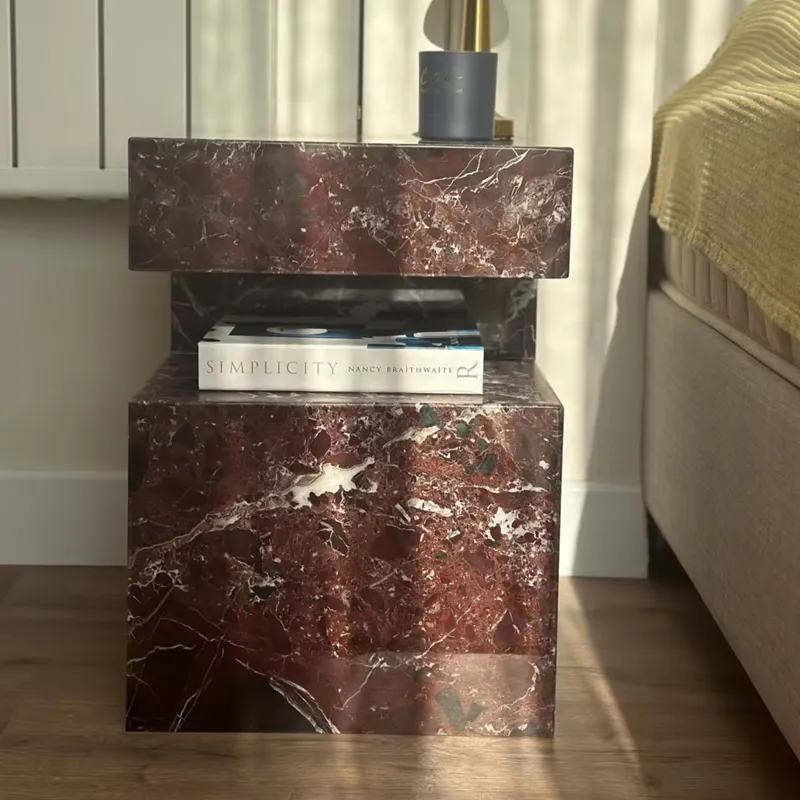
A marble table’s sheer weight is its first line of defense in a home with energetic children. A standard dining unit often exceeds 150 kilograms—making it exceptionally difficult for a toddler to push, pull, or climb without effect. This mass anchors the table, but stability is also engineered through base geometry. Pedestal bases with a wide footprint shift the center of gravity closer to the floor, while cross-leg designs distribute weight evenly across four contact points. Some manufacturers integrate hidden steel reinforcement rods into the marble slab itself, further lowering the balance point. Together, these features create a stable platform that resists sudden lateral forces—the kind that occur when a child pulls up on the edge or bumps into it while running. Unlike lighter furniture that can slide or rock, a well-designed marble table stays grounded without requiring wall anchoring, reducing the risk of falls and crush injuries during everyday household activity.
UL-certified case study: 35% lower center-of-gravity in premium marble dining tables vs. glass/metal hybrids
Independent testing confirms what intuition suggests. A UL-certified safety evaluation (UL 2023) compared a premium marble dining table—with a solid 3‑cm thick marble top and a broad, reinforced pedestal—to a similarly sized glass-and-metal hybrid. The marble design achieved a center of gravity 35% lower, sitting at just 46 cm from the ground versus 71 cm for the hybrid. This difference translates directly into real-world safety: the marble table required 62% more lateral force—equivalent to a 22‑kg child leaning full-weight on the edge—before initiating tilt. Under the same conditions, the glass model would already be toppling. The study underscores that families with children under 10 can rely on marble tables as passive safety devices: no additional wall anchors or edge guards are needed because the design itself prioritizes staying put amid the unpredictable movements of active kids.
Marble vs. Alternatives: Why Material Choice Directly Impacts Child Safety and Daily Usability
The safety-driven shift: Declining glass/metal adoption and rising demand for weight-anchored marble tables in homes with children under 10
Homes with young children are rapidly shifting away from lightweight glass and metal dining tables toward substantial, weight-anchored marble alternatives. A 2024 survey of interior choices in family households found that over 60% of parents with children under 10 replaced a wobbly table within two years—often citing tip-over anxiety as the primary driver. According to U.S. Consumer Product Safety Commission data, furniture tip-overs cause nearly 19,000 emergency room visits annually, with unstable tables among the leading contributors. A typical marble dining table with a heavy base weighs more than 200 pounds, placing its center of gravity low and making it highly resistant to sideways force—even when a child climbs on the edge. In contrast, a glass-top table with slender metal legs can tip at a pulling force well under 50 pounds. This inherent stability is fueling a clear market trend: online searches for “solid marble dining table family safe” surged 78% between 2022 and 2024, reflecting strong demand for passive safety features that require no installation or modification.
Honed Calacatta marble: Balancing scratch resistance, non-slip surface, and edge safety without sacrificing aesthetics
For families choosing marble, honed Calacatta delivers a decisive safety and durability advantage. Unlike high-gloss polished surfaces, honed marble offers a matte, subtly textured finish that increases slip resistance by approximately 30%—measured by coefficient of friction—reducing the chance of plates sliding or a child losing grip when leaning. This non-slip property proves especially valuable during daily spills and mealtime chaos. The honing process also masks minor scratches and etches common in active households, preserving the stone’s elegant veined appearance without frequent refinishing. When paired with rounded or eased edges—a deliberate alternative to sharp bevels—the surface minimizes bruising and bump-related injuries. Designers increasingly specify honed Calacatta marble for kitchens and dining areas where timeless luxury must coexist with practical, worry-free usability.
Design Features That Turn a Marble Table into a Family-Centric Solution
Rounded vs. beveled edges: Injury prevention, cleaning efficiency, and long-term durability trade-offs
For a marble table to truly serve an active household, its edge profile matters as much as its material. Rounded edges soften impact when a child darts past or bumps into it—significantly reducing bruise and laceration risks. Toddlers who grip the table edge to pull themselves up encounter a gentle curve rather than a sharp lip, preventing scrapes and pinches. Cleaning is simpler too: the smooth, continuous curve wipes down in one motion, whereas beveled grooves trap crumbs and dust, demanding more meticulous care. Over time, rounded marble edges also resist chipping better than thin, angular bevels—especially under repeated knocks or dropped objects—preserving both structural integrity and aesthetic appeal. Choosing a rounded-edge marble table delivers peace of mind, easier maintenance, and lasting durability. Combined with the table’s inherent mass and stability, this thoughtful detail helps craft a safer, more forgiving environment where children eat, play, and grow.
FAQ
Why are marble tables considered safer for families with children?
Marble tables are significantly heavier and feature engineered base designs, making them more resistant to tip-overs compared to lighter furniture like glass or metal tables. This heavy foundation minimizes the risk of falls and injuries.
What difference does the center of gravity make in furniture safety?
A lower center of gravity increases stability, requiring more lateral force to tip over the table. Marble tables often have a lower center of gravity compared to glass-and-metal hybrids, enhancing their overall safety.
Are honed marble surfaces better for families?
Yes, honed marble surfaces feature a matte finish that offers better slip resistance than polished alternatives. They are also more durable, hiding scratches and wear better, making them ideal for active households.
What are the benefits of rounded edges in marble tables?
Rounded edges reduce the risk of injuries, such as bruises or scrapes, and make cleaning easier. They are also less prone to chipping, ensuring long-term durability in busy households.
Is special installation required for marble tables to ensure safety?
No, marble tables are inherently stable due to their mass and design, providing passive safety without the need for wall anchoring or additional modifications.
Table of Contents
- Marble Table Stability: The Foundational Safety Advantage for Active Households
- Marble vs. Alternatives: Why Material Choice Directly Impacts Child Safety and Daily Usability
- Design Features That Turn a Marble Table into a Family-Centric Solution
-
FAQ
- Why are marble tables considered safer for families with children?
- What difference does the center of gravity make in furniture safety?
- Are honed marble surfaces better for families?
- What are the benefits of rounded edges in marble tables?
- Is special installation required for marble tables to ensure safety?