 EN

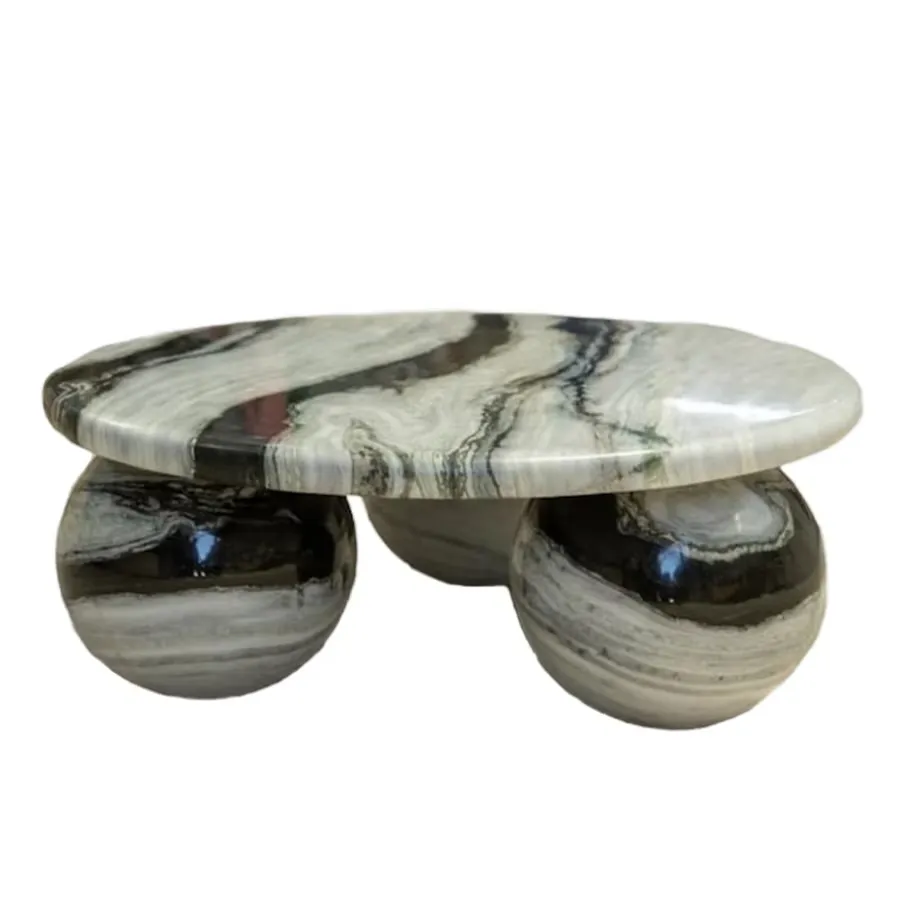
Why Marble Countertop Is Rarely Ideal for Commercial Kitchens
Etching, staining, and scratching: How marble’s calcium carbonate composition fails under constant food-service exposure
Marble is predominantly calcite—a crystalline form of calcium carbonate that reacts readily with even mild acids. In a commercial kitchen, spills of vinegar, citrus juice, tomato sauce, or wine quickly create dull, whitish etches that cannot be wiped away. Its softness (3 on the Mohs scale) leaves it vulnerable to scratches from steel utensils, ceramic plates, and abrasive cleaning pads. Naturally porous, marble absorbs oils, beet juice, and coffee—embedding deep stains that routine washing never removes. Over a single shift, a prep counter can accumulate dozens of micro-damage points. Repeated exposure breaks down the polished surface, turning what was once a sleek slab into a matte, blotchy landscape. Restoration requires professional grinding and honing—processes too disruptive for a working kitchen. No sealant can alter marble’s fundamental chemistry; the calcium carbonate will always react with acids. For operators who cut citrus, dress salads, or handle vinegar-based sauces continuously, a marble countertop guarantees visible deterioration, undermining both hygiene and the aesthetic that justified its premium cost.
The sealing paradox: High-frequency resealing demands vs. health code compliance and operational downtime
Marble’s porosity—typically 0.5–2% absorption—means it must be sealed to resist moisture and microbial penetration. Commercial degreasers and sanitizers strip sealers far faster than household cleaners, often reducing a seal’s life to just 8–12 weeks. Reapplication demands a fully dry, out-of-service surface for 4–12 hours to cure—clashing directly with 24/7 kitchen operations. Many high-performance impregnating sealers contain solvents requiring ventilation and a post-application wait before food contact, raising health code concerns. An inspector may cite unsealed or improperly cured marble as a violation because porous stone can harbor bacteria. Even with rigorous resealing, the repeated downtime eats into revenue and strains staffing schedules. The resulting “sealing paradox” forces a choice: risk code violations and surface contamination, or lose shifts to maintenance. For a high-volume food-service environment, the cost and operational friction of keeping a marble countertop sealed rarely align with the demands of continuous production.
Marble Countertop Performance Benchmarks vs. Commercial-Grade Alternatives
Durability comparison: Marble vs. quartz, quartzite, and polished granite on hardness, porosity, and acid resistance
A marble countertop’s fundamental vulnerability in a commercial setting stems from its calcium carbonate composition. This mineral scores only 3–4 on the Mohs hardness scale—significantly softer than alternatives—making it prone to micro-scratches from sliding ceramic plates, metal utensils, and heavy stockpots. These abrasions dull the finish and create crevices where bacteria can thrive, posing a real health code concern. While its natural coolness benefits pastry work, this advantage is outweighed in general-use zones by rapid surface degradation.
A direct performance comparison reveals why engineered and harder natural stones dominate high-volume kitchens:
| Material | Mohs Hardness | Porosity Level | Acid Resistance |
|---|---|---|---|
| Marble | 3–4 | High | Extremely Low (etches on contact) |
| Polished Granite | 6–7 | Low | High |
| Quartzite | 7 | Low | High |
| Engineered Quartz | 7 | Non-porous | Moderate |
Marble’s porosity acts as a magnet for oils, wine, and acidic sauces—leading to deep, irreversible staining that standard sanitation protocols cannot remove. In contrast, quartz’s non-porous resin binder prevents liquid absorption entirely, a critical advantage for complying with health codes. Granite and quartzite offer dense crystalline structures that resist scratching and etching, even with frequent exposure to citric juices and tomato-based sauces. While granite requires periodic sealing, its maintenance frequency is drastically lower than marble’s.
Yet, a caveat exists: quartz is not invincible to heat, as its resin can discolor above 300°F. This shift slightly favors quartzite, which shares marble’s aesthetic veining but delivers granite-level durability—making it the premium alternative for hot-holding areas. Ultimately, selecting any stone except marble avoids a constant operational battle against surface degradation.
Lifecycle cost analysis: Upfront marble countertop premium versus 5-year TCO of maintenance, repair, and replacement
The total cost of ownership (TCO) for a marble countertop in a commercial kitchen creates a deceptive financial picture. The initial material investment often carries a premium, with installed slab costs starting high. However, this upfront price pales in comparison to the compounding operational expenses required to keep the surface functional and code-compliant over a standard five-year lifecycle.
Consider this cost progression, validated by maintenance data from a leading industry durability publisher:
| Cost Category | Marble (5-Year) | Engineered Quartz (5-Year) |
|---|---|---|
| Professional Sealing | $3,600–$6,000 | $0 |
| Etch/Stain Repair | $2,000–$4,500 | $0 |
| Downtime Cost | $1,000–$3,000 | $0 |
| Replacement Risk | High (Year 3–5) | Nearly None |
The primary financial drain is the requirement for frequent professional sealing. A busy kitchen may need resealing every three to six months to prevent dangerous bacterial ingress—a recurring service cost that rapidly erodes any perceived value. Each session results in operational downtime, as sections of the kitchen become unusable during application and curing. More severe than maintenance, a single shift’s failure to wipe a spilled lemon juice can cause a deep etch requiring professional honing or resurfacing, generating a direct repair bill and further operational interruptions.
When continuous damage compromises sanitation, full slab replacement often becomes necessary within five years—a cost not reflected in a simple initial quote. By comparison, an engineered surface’s non-porous nature eliminates sealing costs, and its high durability prevents staining and etching repair expenses. The logical financial analysis is uncompromising: a surface that actively drains revenue through constant maintenance and poses a pathogen risk is not a premium asset. These ongoing operational costs cement a marble countertop as a strategic liability for any high-volume culinary operation.
When a Marble Countertop Can Work in Commercial Kitchens — With Strict Mitigations
Low-exposure applications: Prep islands, pastry stations, or decorative accents — not primary cooking or washing zones
A marble countertop can survive in commercial kitchens if confined exclusively to low-risk, contact-light areas. Prep islands used only for non-acidic food handling, pastry stations where its cool surface naturally facilitates dough rolling, or decorative accents such as a front-of-house display counter are the only defensible placements. Because marble’s calcium carbonate composition reacts aggressively with citrus, vinegar, and fermentation liquids, it must never serve as a primary work surface near cooking or washing zones. Even in these safer roles, staff must understand that a single overlooked lemon slice can initiate etching within minutes.
Non-negotiable safeguards: Impregnating sealers, strict SOPs for acidic spill response, and scheduled professional restoration
A functional marble countertop under these exceptions demands a layered protection protocol that no commercial operation can shortcut. The first defense is a high-quality impregnating sealer reapplied every 3–6 months—a schedule that aligns with many health-department-required deep-clean cycles. The facility must implement and enforce SOPs that treat any acidic spill as a code-red event: immediate blotting, neutral-pH rinse, and drying. Beyond daily vigilance, scheduled professional restoration every 12–18 months—via honing or re-polishing—is essential to reverse micro-damage before it becomes visibly compromising. Without these measures, the investment transforms into a liability, and the marble countertop will degrade faster than any alternative surface.
Frequently Asked Questions (FAQ)
Why is marble less durable for commercial kitchens than alternatives?
Marble is composed of calcium carbonate, which reacts with acids, scratches easily, and is highly porous, making it prone to etching, staining, and bacterial contamination.
What are better alternatives to marble in commercial kitchens?
Engineered quartz, quartzite, and polished granite are superior options due to their higher hardness, lower porosity, and better resistance to acids and heat.
Can marble be used effectively in commercial kitchens?
Marble can be used in low-risk applications such as pastry stations or decorative accents, with strict safeguards like regular sealing and immediate spill response protocols.
What are the main disadvantages of maintaining marble in a commercial setting?
Marble requires frequent resealing, incurs high downtime costs, and needs professional repair for etching and staining, making its upkeep expensive and disruptive.