 EN
EN

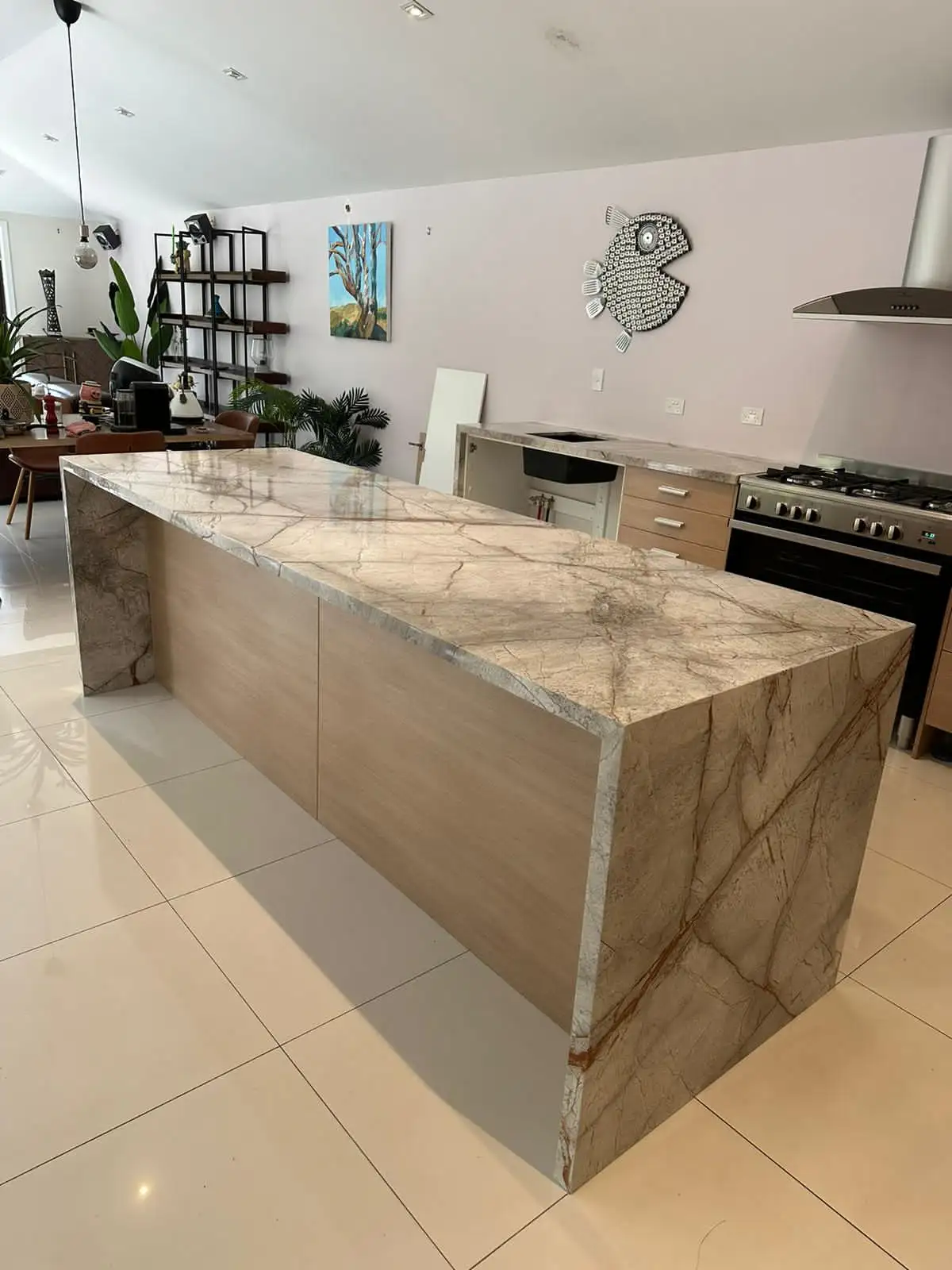
Why Calacatta Gold Is Vulnerable to Etching and Staining
Calacatta Gold’s refined beauty hides a fragile chemistry. Its surface reacts aggressively to everyday acids, and its porous structure readily absorbs liquids unless treated. Understanding these two vulnerabilities—acid sensitivity and porosity—is the first step to preventing permanent damage.
Acid Sensitivity: How Citrus, Vinegar, and Wine Cause Permanent Etching
Acid sensitivity is the most immediate threat to Calacatta Gold. Composed primarily of calcium carbonate, the stone dissolves on contact with acidic substances. Common kitchen items like lemon juice, vinegar, and wine have a low enough pH to trigger a chemical reaction that erodes the polished finish—this is etching, not staining. Etching is physical erosion: even a single drop of citrus left unattended can leave a dull, ring-shaped mark within minutes. Unlike surface dirt, etching permanently alters texture and light reflection, resulting in rough, discolored patches. Mild acids—including tomato sauce and soft drinks—can cause progressive clouding over time. Prevention hinges on immediate spill response and using only pH-neutral cleaners; acid-based products will accelerate damage.
Porosity and Calcium Carbonate: The Science Behind Calacatta Gold’s Stain Susceptibility
Staining stems from Calacatta Gold’s natural porosity. Formed from recrystallized calcite under heat and pressure, it contains microscopic capillary channels that act like a sponge—drawing in liquids before they can be wiped away. Oils, coffee, and red wine penetrate deeply because calcium carbonate has a strong affinity for organic molecules. Once absorbed, pigments and residues dry and bond within the stone, becoming nearly impossible to remove without professional poultices. Even sealed surfaces are vulnerable if the sealer wears unevenly or wasn’t applied correctly. That’s why blotting—not wiping—is essential for oil-based spills, and why trivets, coasters, and cutting boards are non-negotiable protective habits.
Sealing Calacatta Gold Properly for Long-Term Protection
Impregnating Sealers vs. Topical Coatings: Why Only Penetrating Sealers Preserve Calacatta Gold’s Aesthetic and Integrity
Calacatta Gold’s calcium carbonate composition makes it highly reactive to acids—so sealer choice directly impacts longevity and appearance. Impregnating (penetrating) sealers enter the stone’s pores, forming a molecular bond that blocks liquid absorption without altering surface properties. They preserve the natural honed or polished finish, maintain breathability, and retain slip resistance. Topical coatings, by contrast, sit on top as a plastic-like film. They trap moisture and acidic residues beneath, increasing the risk of hidden etching—and often yellow, peel, or become slippery when wet. ASTM C97 testing shows penetrating sealers reduce water absorption by over 90% while keeping color true, resisting UV degradation, and preserving tactile integrity.
| Feature | Impregnating (Penetrating) Sealer | Topical Coating |
|---|---|---|
| Protection mechanism | Sub-surface molecular bond | Surface film |
| Vapor permeability | High – stone can breathe | Low – traps moisture |
| Aesthetic impact | Invisible, color‑fast | May yellow, darken, or gloss |
| Durability | 5–10 years indoors | 1–3 years, wears unevenly |
| Slip resistance | Unchanged | Can become slick |
| Etch risk | Reduced (liquid blocked) | Acid trapped under film |
Sealing Schedule: Frequency Based on Kitchen vs. Bathroom Use (Every 6–12 Months)
Heavy-use kitchen counters require more frequent sealing due to constant exposure to wine, citrus, and oils. Test seal integrity by splashing water—if it no longer beads within 10 minutes, resealing is needed. In kitchens, reapply every 6–9 months. Bathroom vanities and backsplashes face less aggressive contact, so a 12-month interval typically suffices. Always use a non-acidic, water-based penetrating sealer explicitly labeled safe for marble. Over-application can leave a hazy residue, so follow manufacturer instructions precisely. An annual re-seal restores full protection and maintains pristine appearance.
Daily Cleaning Best Practices for Calacatta Gold Surfaces
pH-Neutral Cleaners and Soft Tools: Microfiber, Non-Abrasive Pads, and What to Avoid
Daily cleaning must prioritize gentleness and chemical compatibility. Use a soft microfiber cloth or non-abrasive pad dampened with warm water and a few drops of mild, pH-neutral dishwashing detergent. For dusting, a dry microfiber cloth lifts particles without scratching. Avoid all acidic cleaners—including vinegar, citrus-based solutions, and ammonia—which risk etching. Steer clear of scouring powders, steel wool, and abrasive scrubbers that create micro-scratches and dull luster over time. If using a commercial stone cleaner, verify it is explicitly labeled pH-neutral and marble-safe. After cleaning, dry the surface immediately with a clean, soft cloth to prevent water spots. For deeper cleaning, liquid stone soap may be used sparingly—but always rinse thoroughly to avoid residue buildup.
Preventive Habits and Immediate Spill Response for Calacatta Gold
Blot, Don’t Wipe: Minimizing Penetration Time for Liquids Like Coffee, Red Wine, and Oil
The first seconds after a spill determine whether damage becomes permanent. Wiping spreads liquid across the surface and forces it deeper into pores and micro-fissures. Blotting—with a clean, dry microfiber cloth or paper towel—uses capillary action to draw liquid upward and out, minimizing penetration. According to the Natural Stone Institute’s 2023 guidance, contact time is the single most significant factor in stain development. A simple shift in technique often means the difference between a faint trace and an irreversible mark.
| Spill Type | Wiping Action & Result | Blotting Action & Result |
|---|---|---|
| Red Wine | Spreads pigment, creating a larger, deeper pink stain. | Lifts liquid, often leaving only a faint, removable trace. |
| Coffee | Forces dark liquid into pores, causing deep-set discoloration. | Absorbs spill quickly, minimizing dulling and staining. |
| Cooking Oil | Creates a wide greasy film that attracts dirt and stains. | Contains oil to the initial drip point for easier removal. |
After blotting, gently clean the area with a pH-neutral cleaner to remove any residual substance.
Essential Physical Barriers: Trivets, Coasters, Cutting Boards, and Heat Avoidance
Prevention remains the most effective long-term strategy. Physical barriers intercept threats before they reach the surface—stopping both chemical etching and physical damage. Coasters under all glasses—especially those holding citrus juice or wine—prevent etched rings. Never place hot cookware directly on Calacatta Gold: thermal shock can cause irreversible cracking. Always use trivets or hot pads. For food prep, a dedicated cutting board is mandatory—even polished finishes scratch under ceramic plates or salt shakers. These simple, non-porous tools form the first line of defense, preserving elegance and integrity through daily use.
FAQ
What causes etching on Calacatta Gold?
Etching occurs when acidic substances like citrus, vinegar, or wine come into contact with the calcium carbonate in Calacatta Gold. This triggers a chemical reaction, eroding the polished finish and leaving permanent dull marks.
How can I protect Calacatta Gold from staining?
Regularly seal the surface with a high-quality impregnating sealer, use trivets, cutting boards, and coasters, and blot spills immediately to minimize penetration.
How often should I reseal Calacatta Gold?
For kitchen countertops, resealing every 6–9 months is recommended. Bathroom surfaces can usually be resealed once a year.
Can I use vinegar or ammonia to clean Calacatta Gold?
No, acidic cleaners like vinegar and ammonia can etch the stone. Use only pH-neutral, marble-safe cleaners to maintain the surface.
What’s the best way to clean spills on Calacatta Gold?
Blot the spill immediately using a clean, dry microfiber cloth or paper towel. Then, gently clean the area with a pH-neutral cleaner to remove any residue.