 EN
EN

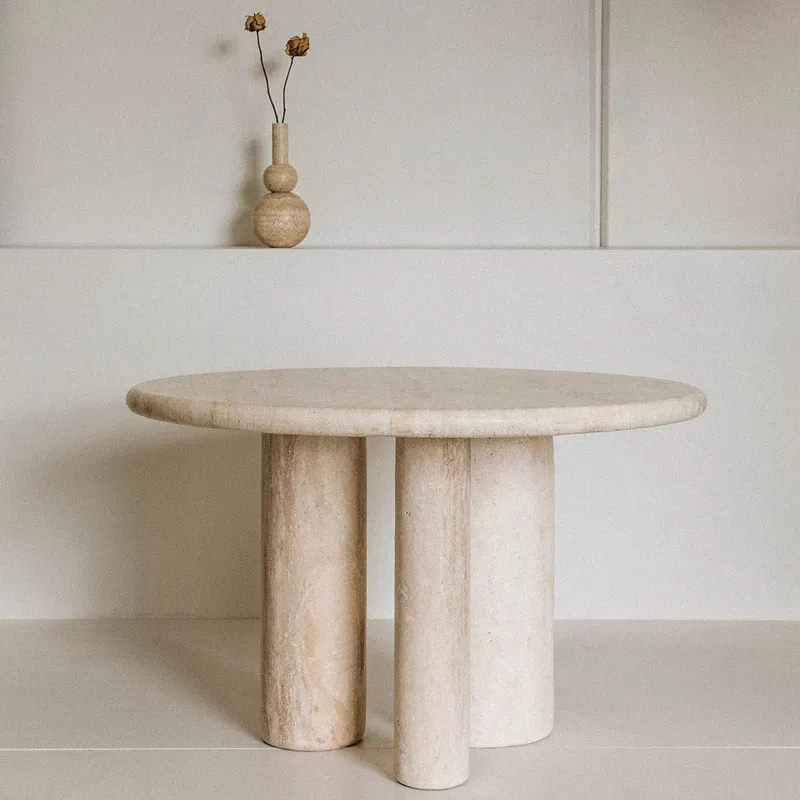
Decoding Travertine Table Aesthetics: Veining, Tone, and Finish
How Veining Pattern and Density Influence Chair Style Choices
Travertine’s veining forms through directional water flow—yielding linear bands in standard cuts or soft, cloudlike patterns in the fleuri (cross-cut) variation. This natural variation directly informs chair selection. Fleuri-cut travertine, with its organic, non-directional grain, pairs naturally with chairs featuring rounded backs and fluid curves. In contrast, pronounced linear veining signals structure and rhythm; it’s best balanced by chairs with clean, angular lines—such as mid-century wood frames—to reinforce, not compete with, the stone’s geometry. Heavy, dramatic veining functions as a focal point, so chairs should maintain visual simplicity—think unadorned silhouettes and restrained detailing—to avoid clutter. Sparse, subtle veining offers a quieter backdrop, allowing bolder chair elements—carved wood details or richly tufted upholstery—to shine. Finish also plays a role: polished surfaces heighten vein definition and crispness, while honed or tumbled finishes soften contrast and emphasize texture—guiding you toward chairs with tactile richness rather than sharp precision. Aligning chair complexity with veining intensity ensures visual cohesion.
Warm vs. Cool Tones in Travertine Tables and Their Impact on Chair Color Matching
Travertine’s inherent color temperature—ranging from warm ivory and Noce to cool silver-gray—sets the tonal foundation for chair pairing. Warm-toned travertine (e.g., light beige or walnut-hued slabs) harmonizes effortlessly with cream, camel, tan leather, or medium-to-dark wood tones, reinforcing an earthy, inviting atmosphere. Cool-toned varieties—like silver-gray or platinum travertine—call for cooler complements: charcoal upholstery, white-painted frames, or brushed brass and matte black metal finishes. Note that finish influences perception: polished surfaces lend optical coolness even to warm stones, while honed or tumbled finishes deepen warmth and softness. For seamless integration, prioritize chairs within the same tonal family. Strategic contrast—such as cool gray velvet chairs with a warm walnut table—can succeed when anchored by supporting elements like a neutral rug or wall tone, but consistency remains the safest path to balance.
Material Pairing Strategies for Travertine Table Chairs
Wood Chairs: Balancing Grain Contrast and Warmth with Travertine
Wood chairs introduce organic warmth that inherently complements travertine’s earthy character. Grain contrast is key: bold, expressive grains—like those in walnut or rift-cut oak—create dynamic dialogue with the stone’s swirling veins, while finer-grained woods (e.g., maple or beech) provide quiet, textural support. Lighter woods such as ash enhance the airiness of ivory travertine, whereas darker species like wenge ground the composition and draw focus to the table’s mottled surface. Matte or natural oiled finishes align tactically with honed or tumbled travertine, reinforcing cohesion through shared subtlety. Avoid high-gloss lacquers, which disrupt travertine’s porous, low-sheen character. Instead, choose finishes that age gracefully—oiled, waxed, or lightly stained—to let both materials develop patina in tandem.
Upholstered Chairs: Velvet, Linen, and Leather Texture Synergies with Travertine
Upholstered chairs add softness and dimensionality that elevate travertine’s architectural presence. Velvet’s dense pile delivers luxurious contrast against the stone’s cool, hard surface—ideal for formal or layered settings. Its light-reflecting quality subtly echoes the luminous depth of honed travertine, enhancing ambient brightness. Linen’s relaxed, breathable texture complements tumbled travertine’s pitted, organic surface—reinforcing a Mediterranean ease. Full-grain leather introduces durability and evolving character: like travertine, it gains richness and depth over time, making it ideal for long-term harmony. Stick to earthy neutrals—oatmeal linen, tobacco leather, slate velvet—to preserve calm tonal continuity. Prioritize natural fibers over synthetics; their nuanced light interaction mirrors travertine’s fissures and depth. Keep silhouettes simple and proportionally refined—strong upholstery shouldn’t overshadow the table’s natural presence.
Metal, Marble, and Mixed-Material Chairs: When Boldness Complements Travertine Table Character
Metal, marble, and hybrid-material chairs inject contemporary energy into travertine settings—but only when calibrated for balance. Brushed brass or matte black steel frames offer sleek, intentional contrast to the stone’s organic warmth; these finishes are especially effective in modern interiors where clarity and restraint define the aesthetic. Steel cools and sharpens cooler-toned travertine, while brass gently warms neutral or warm-hued slabs. Marble chairs introduce a double-stone dialogue: to avoid visual fatigue, select marble with distinctly different veining—Carrara’s fine gray striations on a beige travertine table, for example, create layered sophistication rather than monotony. Mixed-material chairs—such as wood-framed seats with metal legs—echo travertine’s own duality: natural and structured, grounded and refined. Crucially, match visual weight: travertine’s substantial presence demands chairs with confident mass—not spindly profiles nor overwhelming bulk—but considered, proportional form.
Proportion, Scale, and Visual Weight: Ensuring Chair Harmony with Your Travertine Table
A travertine table’s inherent density and textural richness require chairs that hold their own without competing. Standard seat height (18 inches) paired with a 30-inch tabletop yields optimal legroom (12 inches clearance), but always verify apron clearance—especially for armchairs. Visually, avoid lightweight or overly delicate frames that appear undersized beside travertine’s heft; instead, opt for sturdy construction, solid legs, or substantial upholstery volume. Scale alignment matters: chunky, thick-based tables pair well with wider, more grounded chairs, while sleek, slab-style tables suit streamlined, lower-profile seating. The goal isn’t symmetry—it’s equilibrium. Let the table anchor the composition, and allow chairs to respond with complementary presence: neither subordinate nor dominant, but intentionally matched in weight, proportion, and intent.
Real-World Styling Principles: From Modern Minimalist to Rustic Mediterranean Travertine Table Settings
Modern Minimalist: Clean Lines and Monochrome Palettes for Sleek Travertine Tables
Minimalism with travertine centers on reverence for material honesty and precise editing. Choose chairs defined by structural clarity—a slim black powder-coated steel frame, a sculptural white polyurethane shell, or a low-profile upholstered seat in ivory or warm grey. These forms deliberately contrast the stone’s organic veining while respecting its quiet geometry. Monochrome palettes drawn directly from the travertine’s own range—soft taupe, muted oat, or pale stone—allow the honed or matte tabletop to remain the sole visual anchor. Hardware, seams, and decorative elements are minimized or eliminated; light, shadow, and material interplay do the work.
Rustic Mediterranean: Earthy Textures and Handcrafted Details That Elevate Natural Travertine Table Charm
This approach celebrates imperfection, warmth, and tactile layering. Woven rattan or wide-woven wicker chairs bring airy, sun-baked texture that offsets travertine’s cool density. Alternatively, dark hand-forged iron frames—showing subtle patina—with solid walnut or reclaimed timber seats ground the setting in artisanal authenticity. Natural fiber rugs, terracotta accents, and aged brass hardware extend the narrative. Here, the travertine isn’t polished to perfection—it’s appreciated in its raw, tumbled state, and chairs are chosen not for uniformity but for character: slightly irregular, visibly crafted, and rich in organic variation. The result feels gathered, lived-in, and deeply resonant with place.
FAQs
What factors should I consider when selecting chairs for a travertine table?
Key factors include the veining pattern and density of the travertine, its warmth or coolness in tone, and the finish of the stone. These elements will guide decisions on chair types, materials, colors, and styles to maintain harmony and balance in your dining space.
How do different finishes on a travertine table affect chair selection?
Polished finishes heighten veining definition and call for chairs with a sleek, precise aesthetic. Honed or tumbled finishes soften the stone’s appearance and pair better with textured or tactile materials like linen or lightly oiled wood.
What chair materials pair best with travertine tables?
Wood, upholstery (velvet, linen, leather), metal, and marble can all complement travertine. The key is balancing texture, tone, and visual weight to harmonize and highlight the table’s natural character.
How can I ensure the proportions of my chairs match my travertine table?
Choose chairs that align with the table’s visual weight, scale, and height while ensuring enough legroom. For example, a chunky table works well with wider chairs, while a sleek table pairs with streamlined seating.
How do I style a travertine table for modern versus rustic aesthetics?
For modern aesthetics, choose clean lines and monochrome palettes. Opt for subtle and sleek furniture with minimal decorative elements. For a rustic look, embrace earthy textures, handcrafted details, and natural materials like wood, rattan, or terracotta accents.
Table of Contents
- Decoding Travertine Table Aesthetics: Veining, Tone, and Finish
- Material Pairing Strategies for Travertine Table Chairs
- Proportion, Scale, and Visual Weight: Ensuring Chair Harmony with Your Travertine Table
- Real-World Styling Principles: From Modern Minimalist to Rustic Mediterranean Travertine Table Settings
-
FAQs
- What factors should I consider when selecting chairs for a travertine table?
- How do different finishes on a travertine table affect chair selection?
- What chair materials pair best with travertine tables?
- How can I ensure the proportions of my chairs match my travertine table?
- How do I style a travertine table for modern versus rustic aesthetics?