 EN
EN

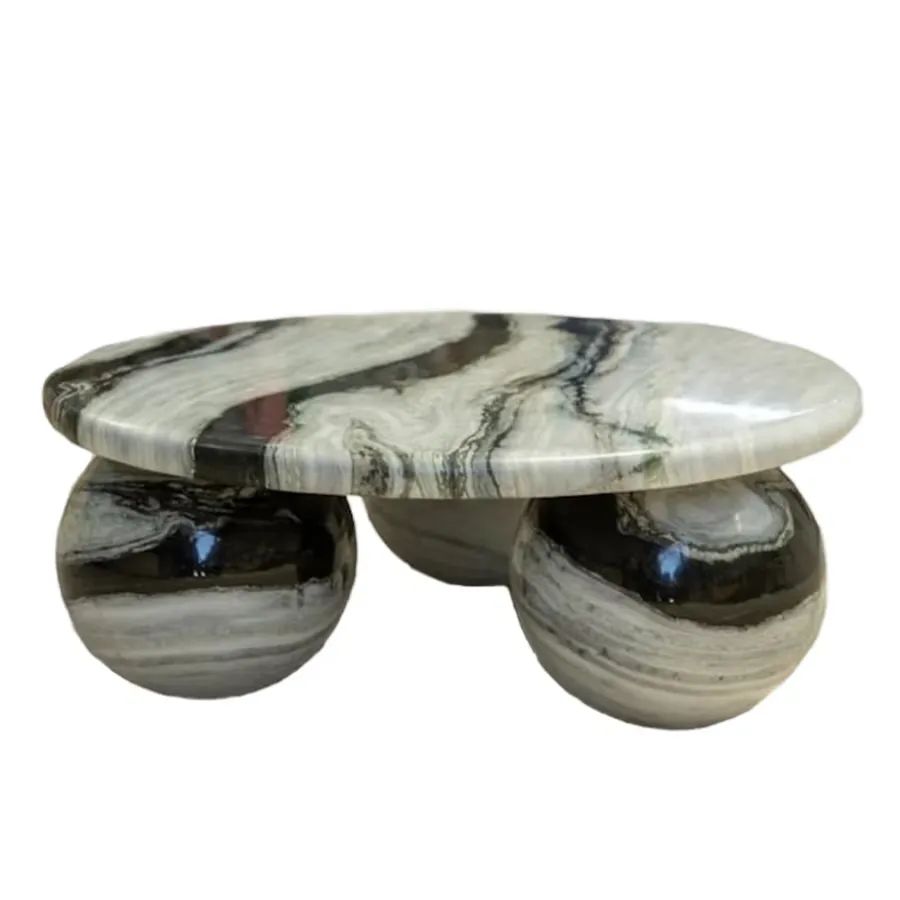
Historical Legacy: Marble Sculpture as Civic Symbolism Across Eras
From Ancient Agoras to Neoclassical Capitols: Marble as the Language of Public Authority
In ancient Greece, marble sculpture anchored public agoras as embodiments of democratic ideals—statues of gods, athletes, and statesmen articulated civic virtue through their polished forms. The Romans adopted and amplified this language, filling forums and basilicas with heroic figures to project imperial authority. This tradition was revived with fervor during the Renaissance and Neoclassical periods, when marble became the definitive medium for capitols, courts, and public monuments. Neoclassical buildings like the U.S. Capitol in Washington, D.C., deployed marble not merely for aesthetics but to visually align young republics with the democratic legacies of Athens and Rome—forging a symbolic continuity that legitimized new political orders. Sculptors leveraged the stone’s luminous surface to carve allegories of justice, liberty, and wisdom, encoding foundational governmental aspirations directly into the architecture. Its inherent durability ensured these symbols would outlast individual regimes, reinforcing the idea that civic principles are as enduring as the stone itself. Today, public art commissions continue to draw on this deep historical grammar—affirming marble’s role not as a relic, but as a living language of civic identity.
Material Excellence: Durability and Weather Resistance of Marble for Outdoor Public Art
Scientific Basis: Low Porosity and Calcite Stability Ensuring Centuries of Exterior Integrity
The longevity of outdoor marble sculpture rests on two interrelated material properties: low porosity and calcite crystal stability. Marble typically exhibits porosity between 0.5% and 2%, sharply limiting water ingress and mitigating damage from freeze-thaw cycles—a key factor in its centuries-long performance in temperate and seasonal climates (Materials Science Reports, 2020). By contrast, more porous stones like limestone can absorb over 15% of their weight in moisture, making them far more vulnerable to internal cracking. Marble’s dense, interlocking calcite crystals provide high compressive strength and promote uniform, gradual weathering rather than spalling or flaking. Though calcite is mildly soluble in acidic rain, the resulting surface reaction forms a thin, self-protecting patina that shields underlying material—evident in Renaissance-era plazas across Europe and North America. Modern sealants can augment this natural resilience, but the core durability stems from the same geological architecture that has preserved civic sculpture since antiquity.
Aesthetic Authority: How Marble Sculpture Enhances Architectural Prestige and Presence
Light Interaction and Surface Refinement: Why Polished Marble Commands Attention in Public Plazas
Marble’s luminous presence arises from its crystalline structure, which allows light to penetrate slightly before reflecting—producing a soft, internal glow unmatched by synthetic or opaque materials. When polished using progressively finer abrasives, its surface achieves exceptional smoothness, maximizing light refraction while accentuating natural veining and tonal variation. This optical richness transforms static form into a dynamic focal point in public plazas, where shifting daylight continually redefines its presence. Unlike painted steel or textured concrete, polished marble doesn’t just occupy space—it enriches it, lending gravitas and refinement to surrounding architecture. Its reflective quality also fosters visual integration: catching sky, foliage, or adjacent façades, it feels both monumental and grounded. Crucially, the polishing process also reduces surface porosity, lowering moisture absorption and minimizing soiling—reducing long-term maintenance while sustaining visual impact. The result is an aesthetic authority rooted equally in geology and craft: a material that commands attention without demanding dominance.
Contemporary Relevance: Balancing Tradition, Identity, and Inclusivity in Public Marble Sculpture
Beyond Monumentality: Modern Curation of Marble Sculpture in Democratic and Diverse Civic Spaces
Contemporary public art no longer equates civic significance with singular heroism. Today’s marble sculpture reflects plural identities and evolving values—shifting from commemorative statuary toward works that invite dialogue, reinterpret history, and embody shared aspiration. Abstract compositions, fragmented figuration, and site-responsive forms now coexist with classical references, expanding the interpretive space of civic plazas. A polished marble installation in a transit hub or neighborhood square can become both landmark and gathering node—rooted in tradition yet unmistakably of its time. Increasingly, cities commission such works through inclusive processes: collaborating with local artists, hosting community workshops, and centering narratives historically excluded from official monuments. These efforts transform marble sculpture from a static emblem of authority into an active participant in democratic life—visually resonant, socially engaged, and emotionally accessible. In doing so, they reaffirm marble’s enduring relevance: not as a vessel of fixed meaning, but as a medium capable of holding complexity, honoring memory, and shaping inclusive futures.
FAQ
Why has marble been historically significant for civic symbolism?
Marble has been used to visually represent civic ideals due to its durability, luminous beauty, and association with authority and tradition, drawing references from classical civilizations like Greece and Rome.
What makes marble suitable for outdoor public art?
Marble’s low porosity and calcite crystal stability give it superior weather resistance. Its natural patina and ability to withstand freeze-thaw cycles add to its longevity.
How does polished marble enhance the aesthetic presence of public sculptures?
Polished marble interacts with light to produce a soft glow that accentuates natural veining, lending richness and dynamic visual appeal to sculptures in public spaces.
How is marble art being adapted to contemporary contexts?
Modern marble sculptures emphasize inclusivity, multi-faceted meanings, and participatory creation processes, aligning tradition with democratic diversity.
Table of Contents
- Historical Legacy: Marble Sculpture as Civic Symbolism Across Eras
- Material Excellence: Durability and Weather Resistance of Marble for Outdoor Public Art
- Aesthetic Authority: How Marble Sculpture Enhances Architectural Prestige and Presence
- Contemporary Relevance: Balancing Tradition, Identity, and Inclusivity in Public Marble Sculpture