 EN

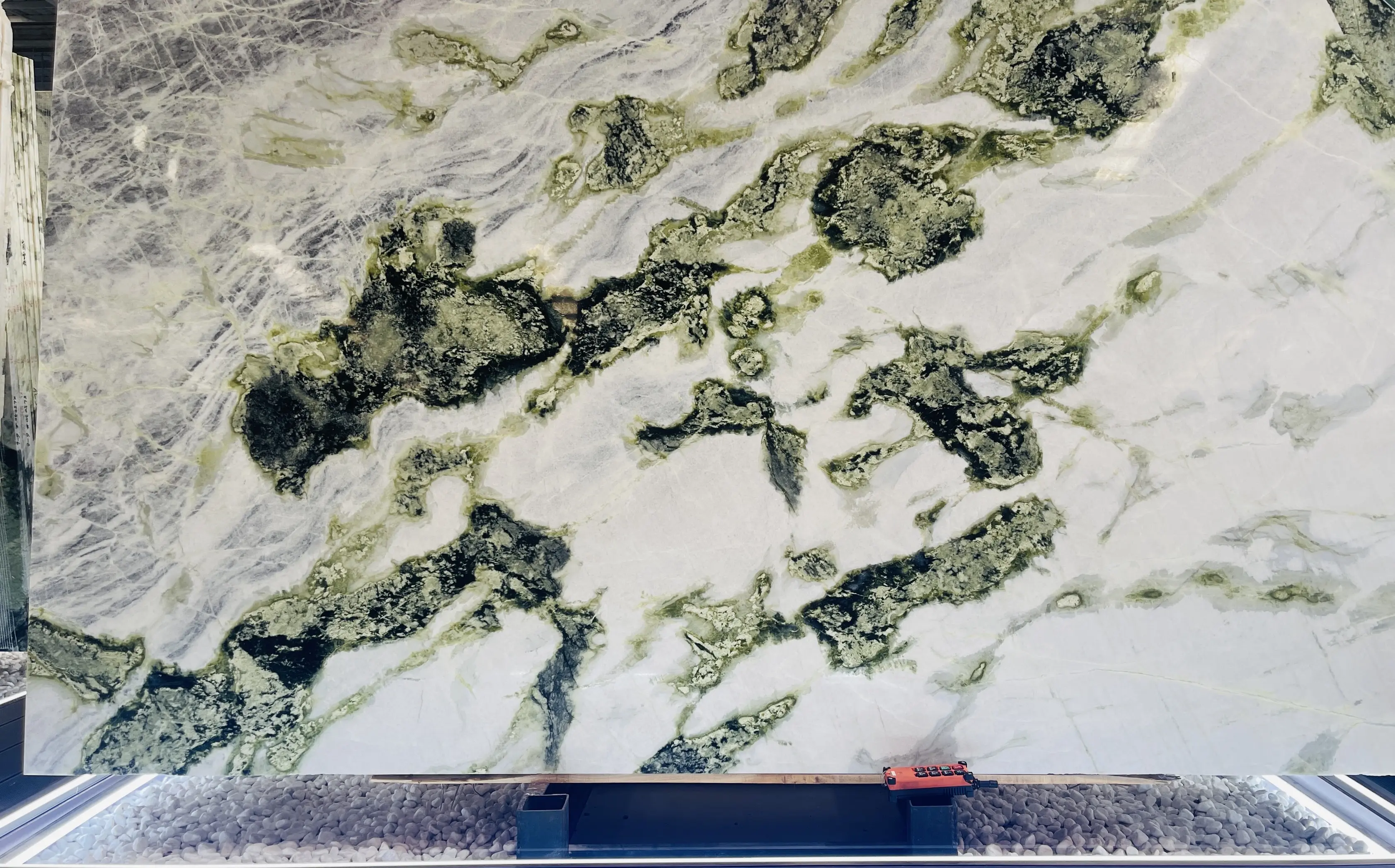
Unmatched Aesthetic Authority of Marble Countertop
Natural Veining, Depth, and Light Refraction: The Irreplaceable Visual Language of Marble Countertop
Each marble countertop carries a geological signature formed over millennia—making duplication in engineered stone impossible. Its veining, born from mineral impurities like iron oxides and clay, flows in irregular, organic trajectories that catch and scatter light uniquely across every square inch. Translucent calcite crystals allow photons to penetrate slightly beneath the surface, producing a soft luminescence that engineered quartz—bound by opaque resin—cannot replicate. Unlike printed patterns on synthetic composites, marble’s veining runs through the full thickness of the slab, revealing new detail when edges are beveled or sculpted. This three-dimensional character ensures shifting interplays of light and shadow with every viewing angle, transforming the countertop into a living canvas. A 2024 HOUZZ study found that 78% of design professionals rated natural stone superior for “visual warmth and authenticity” compared to engineered alternatives—underscoring marble’s irreplaceable sensory presence in spaces where experience matters as much as function.
Luxury Perception and Emotional Resonance: How Marble Countertop Uniqueness Drives Premium Value in High-End Design
In luxury real estate, a marble countertop functions as a psychological anchor of quality. Its singular pattern—no two slabs alike—immediately signals exclusivity, much like a fingerprint. This one-of-a-kind attribute triggers a strong emotional response: homeowners feel their space is not merely decorated but thoughtfully curated. Property valuation data confirms this effect; a National Association of Home Builders (NAHB 2023) survey found kitchens featuring marble contributed to a 5–7% higher perceived home value among buyers. Designers leverage this resonance to transcend trends—marble’s timeless aura resists aesthetic obsolescence in ways artificial stone cannot match. Its tactile luxury also elevates perception: the naturally cool, micro-textured surface of honed marble evokes a refined sensibility that engineered alternatives—with their uniform, synthetic smoothness—fail to replicate. In high-end design, this multisensory impact transforms a utilitarian surface into a statement of identity, justifying its premium investment through enduring equity and daily delight.
Superior Functional Performance of Marble Countertop
Thermal Stability and Structural Integrity: Real-World Heat Resistance and Compressive Strength vs Engineered Quartz
Thermal stability distinguishes marble countertops in practical use. Unlike engineered quartz—whose performance is constrained by polymer resin—marble endures brief direct heat exposure without irreversible damage. Key comparative data:
| Property | Marble Countertop | Engineered Quartz |
|---|---|---|
| Compressive Strength (psi) | 12,000–18,000 (ASTM C170, 2022) | 20,000–30,000 (typical industry specifications) |
| Continuous Service Temperature | Up to 200°C (Natural Stone Institute 2022) | 150°C max (resin softening point) |
| Thermal Expansion (linear coefficient) | ~7 × 10⁻⁶/°C | ~30 × 10⁻⁶/°C (resin dominant) |
While quartz shows higher compressive strength on paper, its heat resistance is limited by the binder: exposure above 150°C risks discoloration, warping, or subsurface blistering. Marble’s low thermal expansion minimizes stress cracking from sudden temperature shifts. In a busy kitchen, a hot baking sheet placed briefly on sealed marble poses no lasting harm—whereas the same action may permanently compromise quartz’s resin matrix. This real-world reliability, validated by ASTM standardized testing, affirms marble’s structural integrity beyond laboratory metrics.
Patina as Value Evolution: How Marble Countertop Gains Character and Worth Over Time—Unlike Static Artificial Stone
A marble countertop evolves—not degrades—gaining aesthetic and financial value through patina. This organic transformation—softened edges, subtle etching, and a warm, silky sheen from decades of use—narrates authenticity. Calcite’s slight solubility in ambient acidic moisture causes gentle surface etching, while repetitive friction polishes the stone, creating a luster unique to each installation. In contrast, polyester-resin composites yellow, peel, or develop irreversible micro-fractures over time. A 2023 NAHB survey linked natural stone surfaces—including marble—to up to 7% higher resale value, citing perceived timelessness and narrative richness as key drivers. Architects and appraisers recognize this evolution as a hallmark of luxury: patina is not wear, but a controlled metamorphosis—akin to fine leather developing depth. Properly sealed and maintained, marble never looks “worn out”; instead, it grows more distinct. As light catches its evolving micro-texture, it reflects a living, breathing character that mass-produced quartz cannot emulate. Owners often report deepening attachment over decades, as each mark becomes part of the home’s heritage—offering both emotional resonance and economic longevity unmatched by static artificial alternatives.
Realistic Durability and Maintenance Profile of Marble Countertop
Stain Resistance Clarified: pH-Sensitive Vulnerability and Why Properly Sealed Marble Countertop Outperforms Unsealed Quartz (ASTM C1353 Evidence)
The perceived fragility of marble regarding staining stems from a narrow chemical reality—not inherent weakness. Calcite reacts to acids with surface etching (a dulling effect), not absorption-based staining. Lemon juice leaves an etch, not a stain; oil requires pore penetration to stain—and modern sealants effectively block that path. In contrast, unsealed quartz—despite marketing claims of non-porosity—is vulnerable where its polyester resin binder interacts with common agents. ASTM C1353 cyclic abrasion testing reveals that turmeric, hot cooking oils, and alkaline cleaners can cause permanent discoloration in quartz by triggering plasticizer migration and subsurface yellowing—damage that cannot be polished away. A properly sealed marble countertop outperforms this scenario: its homogenous crystalline structure allows sealants to bond chemically with calcium carbonate while preserving vapor permeability. When challenged, contaminants remain superficial atop the sealed micro-relief—whereas the same agents initiate irreversible chemical degradation in unprotected resin-based slabs. Maintenance, therefore, is not about restriction—but intelligent stewardship: using pH-neutral cleaners and resealing every 12–24 months maintains hygienic, resilient performance. The durability advantage lies not in origin, but in this reversible, chemistry-driven protection—giving marble a decisive edge over permanently compromised binders.
Long-Term Value and Investment Superiority of Marble Countertop
Marble countertops deliver exceptional long-term value by enhancing resale appeal and enduring for generations with proper care. Real estate professionals consistently observe that kitchens featuring premium marble attract higher offers and sell faster than those with engineered alternatives. Unlike quartz—which can appear dated within a decade—marble’s timeless elegance and evolving patina increase its perceived worth, allowing homeowners to recoup a significant portion of the installation cost. In eco-conscious markets, marble’s natural origin and extraordinary lifespan further resonate: a 2024 PwC survey found that 85% of consumers have felt climate change impacts and are willing to pay 9.7% more for sustainably produced goods. This premium extends to the kitchen, where marble’s ability to outlast synthetic materials reduces construction waste and material turnover—making it both fiscally sound and environmentally responsible. With its blend of enduring beauty, functional resilience, and ethical longevity, marble remains the definitive long-term investment in high-performance, high-value residential design.
Frequently Asked Questions (FAQ)
Why is marble considered superior to engineered quartz in luxury design?
Marble’s unique veining, timeless aesthetic, and ability to develop a distinctive patina over time make it a key element in luxury design, adding both emotional and financial value.
Does marble require special care to maintain its durability?
Yes, marble must be properly sealed and cleaned with pH-neutral solutions to protect against etching and staining. Regular resealing every 12–24 months ensures its longevity.
Can marble withstand high temperatures compared to engineered quartz?
Yes, marble has superior thermal stability, allowing it to endure brief exposure to high temperatures without warping or discoloration, unlike resin-bound quartz.
What is patina, and how does it enhance marble countertops?
Patina refers to the subtle changes in texture, sheen, and color that develop naturally over time, adding character and increasing the value of marble countertops.
How does marble contribute to sustainability in kitchen design?
Marble is a natural material with a long lifespan, reducing material turnover and construction waste, making it a sustainable choice for eco-friendly home designs.
Table of Contents
- Unmatched Aesthetic Authority of Marble Countertop
- Superior Functional Performance of Marble Countertop
- Realistic Durability and Maintenance Profile of Marble Countertop
- Long-Term Value and Investment Superiority of Marble Countertop
-
Frequently Asked Questions (FAQ)
- Why is marble considered superior to engineered quartz in luxury design?
- Does marble require special care to maintain its durability?
- Can marble withstand high temperatures compared to engineered quartz?
- What is patina, and how does it enhance marble countertops?
- How does marble contribute to sustainability in kitchen design?