 EN
EN

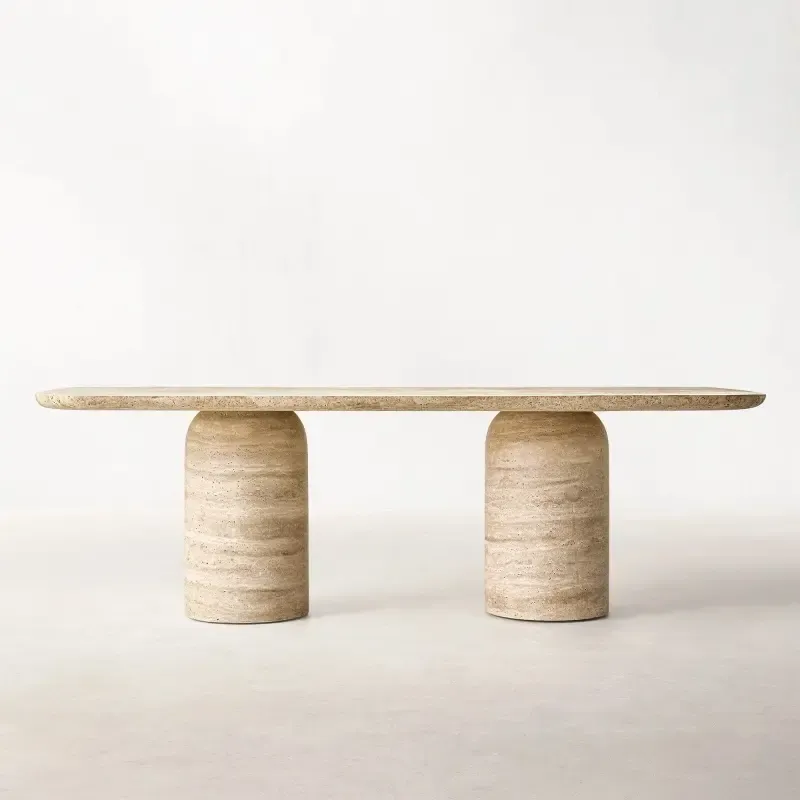
Timeless Aesthetic Appeal of a Travertine Table
Natural veining, earthy tones, and organic texture that define travertine table elegance
Travertine forms through mineral deposition in hot springs—creating distinctive bands of color and delicate, web-like veining across every slab. This natural process yields a warm, earthy palette: ivory, soft beige, and rich walnut tones—each subtly flecked and unique. The stone’s lightly porous, organic texture feels tactile and inviting, avoiding the cold uniformity of synthetic surfaces. No two tabletops share the same pattern, making each piece a quiet signature of the home. Gentle surface undulations catch light softly, lending depth that shifts with the time of day. Designers value how these natural markings introduce character without overwhelming a space—ensuring the table remains a timeless anchor as décor evolves.
How a travertine table enhances dining room ambiance—warmth, sophistication, and visual grounding
A travertine dining table imparts warmth often missing from hard, glossy surfaces. Its neutral, earthy hues absorb and reflect light gently, softening the entire room and fostering an inviting atmosphere for conversation and lingering meals. The stone’s substantial weight provides visual grounding, anchoring the dining area with calm, centered presence. This stability conveys understated sophistication—allowing the table to function as a sculptural focal point without dominating the space. Its organic texture and tonal variation harmonize effortlessly with wood, metal, or upholstered chairs, bridging contemporary and traditional styles. The result is a curated yet comfortable dining environment where quiet elegance elevates everyday moments.
Structural Performance: Durability and Stability of a Travertine Table
Inherent strength and load-bearing capacity for long-term dining use
Travertine possesses inherent compressive strength—typically 50–80 MPa—exceeding that of common hardwoods like oak (<50 MPa) (Material Science Data, 2023). This robustness enables the surface to support heavy serving platters, full dinnerware sets, and incidental pressure without cracking or sagging over decades. Unlike laminated wood or veneer, solid travertine slabs distribute weight evenly, eliminating structural weak points near joints. Lab testing confirms properly cut slabs withstand static loads well above 200 kg without visible deformation. When sealed correctly, the stone maintains dimensional stability through seasonal humidity shifts—preserving integrity and performance. For high-traffic dining spaces hosting daily meals, family gatherings, and holiday feasts, this margin of strength translates into reliable, long-term functionality.
Weight-driven stability—reducing wobble and ensuring safety in active dining environments
A standard 180-cm travertine tabletop weighs 80–100 kg—significantly more than an equivalent wood slab—thanks to its density (~2.5 g/cm³). This mass delivers passive stability: children climbing onto chairs, guests leaning across the table, or pets brushing past won’t trigger tipping or sliding. In homes with young children—or commercial settings like tasting rooms—this low center of gravity prevents dangerous wobble that could spill hot liquids or shatter glassware. Engineers recognize mass as one of the most effective anti-vibration measures; the stone absorbs kinetic energy that would otherwise set lighter tables rocking. Paired with a sturdy pedestal or thick legs, travertine remains planted even on slightly uneven floors—reducing maintenance concerns and enhancing everyday safety and comfort.
Functional Benefits: Heat Resistance and Daily Practicality of a Travertine Table
Superior heat resistance—safely accommodating hot dishes and cookware without damage
Travertine’s limestone composition grants exceptional thermal stability, allowing direct contact with pots, pans, and oven-hot serving dishes without scorching, warping, or developing white heat marks—unlike wood or laminate surfaces. Properly sealed travertine resists heat up to several hundred degrees Celsius, enabling seamless service straight from stove or oven. As a naturally fire-resistant material, it neither ignites nor emits toxic fumes under high heat—adding a layer of safety in active kitchens and dining areas. This practical resilience simplifies meal service while protecting surface integrity, reinforcing travertine’s role as both functional and enduring.
Realistic Care Requirements for a Travertine Table
Understanding Porosity, Recommended Sealing Frequency, and Effective Stain Prevention Strategies
Travertine is a porous limestone—with absorption rates of 2–5% by weight—making it vulnerable to liquid penetration and staining without protection. Sealing is non-negotiable at purchase and essential for longevity. Industry best practices recommend reapplying a high-quality penetrating sealer every 1–3 years; households with frequent dining activity benefit from annual treatment. A simple water-bead test signals when resealing is needed—if droplets no longer bead and begin to soak in, it’s time to refresh the barrier. Unsealed travertine can absorb spills within minutes, leading to permanent discoloration. The sealing process is straightforward: clean thoroughly, apply sealer evenly, allow penetration (10–15 minutes), then wipe away excess—a 1–2 hour task. For stain prevention, act immediately on spills—especially red wine, coffee, citrus juice, and tomato-based sauces—using a soft cloth and pH-neutral cleaner. Avoid bleach, ammonia, or acidic cleaners, which degrade sealers and etch the stone. Use trivets for hot cookware and coasters for glasses to prevent thermal shock and condensation rings. While sealing greatly reduces risk, no treatment renders travertine fully impervious—so consistent, proactive care remains the strongest safeguard. Should stains occur, a poultice can draw out deeper discoloration, and professional honing restores surface luster after etching.
FAQ
What makes a travertine table unique?
A travertine table features natural veining, earthy tones, and a lightly porous texture, making each piece one-of-a-kind and adding timeless beauty to any home.
How durable is a travertine table?
A travertine table is highly durable and robust, with compressive strength exceeding many hardwoods. When properly sealed, it withstands heat, weight, and daily usage with ease.
Does a travertine table require special care?
Yes, regular sealing (every 1–3 years) and immediate attention to spills are essential for maintaining its appearance. Avoid using acidic cleaners and always use coasters or trivets to further protect the surface.
Can travertine tables handle hot dishes?
Yes, travertine is naturally heat-resistant and can accommodate hot pots and pans without damage, provided it is properly sealed.