 EN
EN

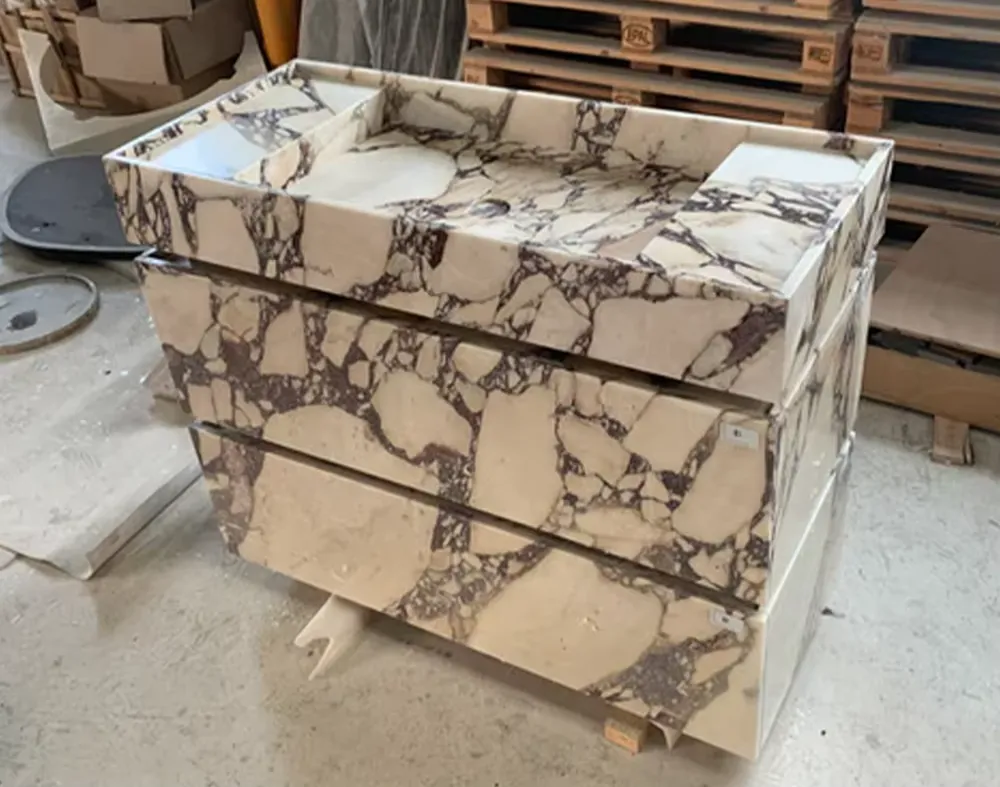
Geological Rarity and Origin Impact on Calacatta Gold Pricing
Apuan Alps scarcity: diminishing output from premium blocks like Block 107
The Apuan Alps in Tuscany, Italy, are the only geological source of authentic Calacatta Gold—a marble distinguished by its warm white background and bold grey-gold veining. Centuries of quarrying have exhausted the most accessible, high-yield deposits, leaving only a few active quarries capable of producing material that meets rigorous aesthetic and structural standards. Top-tier blocks—such as the legendary Block 107—are now exceptionally rare. Reaching them requires deeper extraction into fractured, geologically complex strata, reducing usable slab yield significantly: a block that once delivered 30% recoverable material may now yield just 15%. Environmental protections in the Carrara basin further constrain new quarry development, effectively capping supply growth. As a result, Calacatta Gold’s price reflects not just market demand, but verifiable geological exhaustion—the kind documented by the Italian Ministry of Ecological Transition and cited in the Journal of European Geosciences.
Geological variability: how formation depth influences veining consistency and usable slab yield
Geological origin matters more than geography alone. The depth at which Calacatta marble formed—under varying pressure and temperature over millions of years—directly determines its veining structure and structural reliability. Deeper formations yield tighter, more uniform veining and fewer internal fissures, making them ideal for large-format, book-matched installations. Shallower layers often produce erratic, fragmented veins and micro-fractures that can cut usable yield by 20–40%. Slabs with uninterrupted, fluid veining command premiums because they maximize cut-out efficiency and minimize waste during fabrication. Quarry operators rely on core sampling and historical yield data to identify high-performance blocks; those with proven consistency are reserved for elite architectural commissions. This explains why two slabs sourced from the same mountain—but different stratigraphic levels—can differ in value by up to 30%, even before finishing or fabrication.
Material Quality Grading and Its Direct Effect on Calacatta Gold Value
The visual impact of Calacatta Gold is inseparable from its technical performance. Its commercial value is anchored in an industry-standard grading system that evaluates structural integrity and aesthetic consistency—not subjective beauty alone. This objective framework ensures buyers understand long-term durability, fabrication feasibility, and true cost-per-useful-square-foot.
Grade A–C differentiation: fissures, tone shifts, and background uniformity driving up to 40% price variance
Grading follows a strict tri-tier scale (A to C), assessing three measurable criteria: presence and severity of natural fissures, consistency of the white background tone, and uniformity of veining pattern. Grade A represents the top 5–10% of output: flawless surfaces with brilliant, consistent whiteness and dramatic, unbroken veining—free of structural cracks. These slabs routinely carry a 30–40% premium over Grade B, which permits minor inclusions, light tonal variation, and modest veining irregularities. Grade C accommodates more pronounced fissures (often resin-filled), significant background color shifts, and inconsistent veining—making it suitable for lower-risk applications like feature walls. Crucially, as noted by the Marble Institute of America (MIA) in its Natural Stone Reference Manual, a visually striking slab may still be downgraded to C if fissures compromise structural integrity—a reminder that performance, not just appearance, defines value.
Slab dimensions and thickness: 2cm vs. 3cm and oversized formats (e.g., 65″ × 125″) as yield and cost multipliers
Physical specifications act as powerful cost multipliers—driven less by aesthetics and more by yield efficiency and fabrication logistics. The choice between 2cm and 3cm thickness carries functional implications: while 3cm slabs cost more per square foot, they eliminate the need for plywood substrates and support heavier edge profiles—reducing labor and complexity for kitchen countertops. Jumbo formats like 65″ × 125″ offer transformative design advantages: a single slab can cover a full island surface without seams, dramatically improving continuity and perceived luxury. But their size increases handling risk—fabrication breakage and transit damage are factored into pricing. The table below reflects real-world yield and cost dynamics observed across U.S. fabrication facilities.
| Dimension | Typical Application | Relative Cost | Key Yield Consideration |
|---|---|---|---|
| 2cm (Standard) | Bathroom vanities, walls, backsplashes | Lower base material cost | Requires substrate; higher fragility increases waste risk |
| 3cm (Standard) | Kitchen countertops, heavy-use surfaces | Higher base material cost | Self-supporting; reduces substrate and edge-labor steps |
| Jumbo (e.g., 65" × 125") | Large kitchen islands, statement walls | Highest premium per slab | Maximizes continuous surface area; minimizes seams and layout constraints |
Finish Selection and Fabrication Complexity in Calacatta Gold Projects
Surface finish isn’t just aesthetic—it dictates labor hours, edge detailing, material loss, and final installation viability. Each option presents distinct trade-offs between visual impact, tolerance for natural variation, and total project cost.
Polished, honed, and leathered finishes: labor intensity, edge-profile requirements, and waste implications
Polished finishes deliver maximum visual drama—enhancing contrast and depth in the veining—but demand the highest level of slab perfection. Even microscopic fissures become visible under mirror gloss, leading fabricators to reject up to 20% of candidate slabs. Edge polishing must match the surface precisely, adding 2–3 hours per linear foot. Honed (matte) finishes require fewer abrasive passes and conceal minor surface flaws, allowing broader grade acceptance and moderate waste. Leathered (brushed) finishes provide the greatest fabrication flexibility: the textured surface masks small imperfections and fissures, reduces cutting breakage, and pairs well with simple eased or beveled edges—cutting labor time by up to 40% compared to polished edges. As outlined in the MIA’s Fabrication Best Practices Guide, finish selection should be made early in procurement—not as an afterthought—to align slab grading, yield expectations, and budget.
| Finish | Labor Intensity | Typical Edge Requirement | Waste Implication |
|---|---|---|---|
| Polished | High | Full polish to match gloss | Up to 20% loss from rejected slabs |
| Honed | Moderate | Fine-honed or eased edge | Moderate yield; minor flaw tolerance |
| Leathered | Low to moderate | Eased or simple bevel | Lowest waste; fissures effectively concealed |
Logistics, Import Costs, and Supplier-Specific Levers for Calacatta Gold Procurement
End-to-end cost breakdown: crating, ocean freight, EU export compliance, US customs (HTS 2515.12.00), and domestic delivery
The landed cost of Calacatta Gold extends far beyond the quarry gate. Crating alone adds $200–$500 per slab: heavy-duty, ISPM 15–compliant wooden crates are mandatory for international shipment. Ocean freight is typically quoted per container (FCL preferred), with marine insurance at ~0.3% of cargo value covering transit breakage. EU export compliance includes certificates of origin, phytosanitary documentation, and adherence to Regulation (EU) No 995/2010 on timber legality. Upon U.S. entry, HTS code 2515.12.00 applies—a 3.9% duty rate plus Merchandise Processing Fee (MPF) and Harbor Maintenance Fee (HMF). Domestic delivery from port to warehouse via flatbed truck ranges from $500–$1,500, depending on distance and scheduling urgency. Smart procurement hinges on Incoterms negotiation: FOB (Free On Board) places responsibility on the buyer post-loading; CIF (Cost, Insurance, Freight) transfers risk later in the chain—but often at a markup. A transparent proforma invoice, itemizing all these components, is essential to avoid unexpected port charges or clearance delays.
FAQ
Why is Calacatta Gold so expensive?
Calacatta Gold is expensive due to its geological rarity, stringent grading criteria, limited supply from the Apuan Alps, diminishing usable slab yield, and intricate logistics involved in quarrying, transporting, and fabricating the marble.
What determines the grading of Calacatta Gold slabs?
Grading is based on structural integrity and aesthetic metrics like fissure presence, veining pattern consistency, and the whiteness of the background tone. Grade A slabs offer exceptional quality and command the highest prices.
What factors influence the cost of Calacatta Gold projects?
Key factors include slab dimensions (e.g., 2cm vs. 3cm), surface finish selection, logistical expenses like crating and customs, and fabrication complexity. Larger slabs and polished finishes typically drive higher costs due to waste risk and labor intensity.
How does veining consistency affect the value of Calacatta Gold?
Slabs with uninterrupted, fluid veining maximize yield efficiency and reduce waste during fabrication, making them highly desirable for high-end architectural projects and commanding premium prices.