 EN
EN

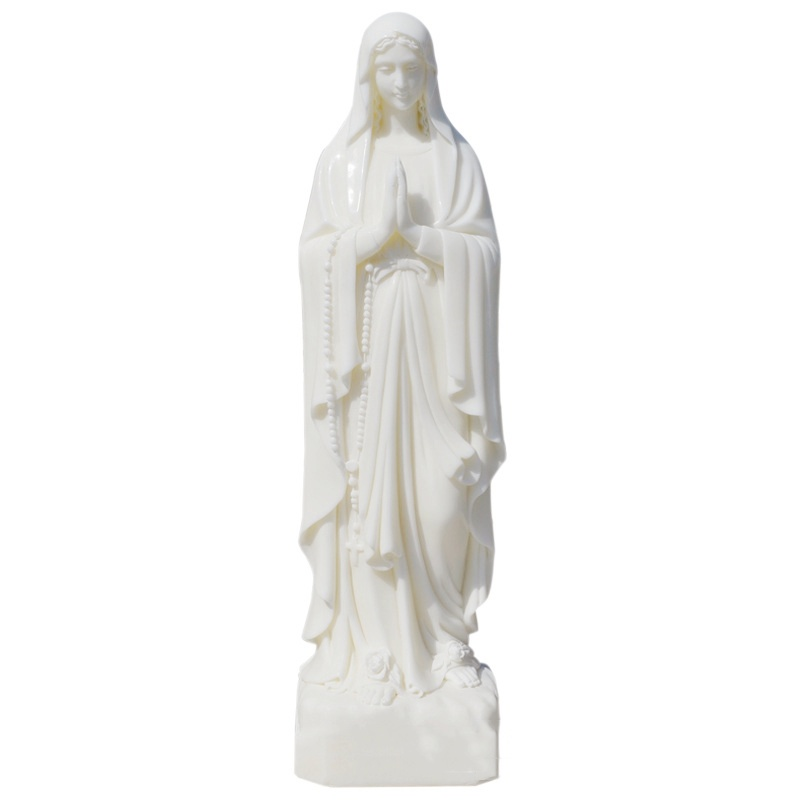
Aesthetic Enhancement: How Marble Sculpture Elevates Architectural Space
Optical Qualities: Light Refraction, Veining, and Textural Warmth in Façades and Interiors
Marble sculpture transforms architectural light into a living medium. Its crystalline structure allows light to penetrate a few millimeters below the surface, producing a soft, diffused glow unmatched by painted or synthetic materials. This subtle translucency softens the visual severity of glass-and-steel façades while lending interiors—especially lobbies, galleries, and atria—a textural warmth that invites engagement. Unlike uniform surfaces, marble’s natural veining acts as a dynamic, mineral-driven composition: each vein traces a unique geological history, turning static walls and plinths into evolving canvases that shift with ambient light and viewing angle.
The interplay of polished and honed finishes further modulates illumination. High-gloss exteriors reflect sunlight with dramatic clarity; honed or leathered interior surfaces diffuse light gently, enhancing spatial depth and reducing harsh contrast. Crucially, marble’s optical behavior is inherently variable—its luminosity changes across time of day, season, and perspective—making the sculpture an active, responsive element rather than a passive object.
Spatial Perception: Scale, Proportion, and Contrast Between Carved Form and Built Environment
Marble sculpture fundamentally reshapes spatial cognition—not through size alone, but through calibrated relationships of scale, proportion, and material contrast. A monumental figure in a vast plaza compresses perceived distance, anchoring the space; a life-sized bust in a narrow corridor expands it, subtly widening the passage through human-scale resonance. Classical architects understood this intuitively: the ratio of statue height to column height guided vertical emphasis in porticos, turning structural rhythm into narrative progression.
In contemporary settings, organic marble forms juxtaposed against rigid geometry—such as curved figurative sculpture set within a rectilinear atrium—activate dead zones and disrupt visual monotony. The tactile richness of carved stone contrasts sharply with smooth, flat architectural planes, drawing attention to materiality and craft. When placed at the terminus of a long axis—like a hallway or colonnade—the sculpture leverages foreshortening to become a powerful focal point, guiding movement and framing arrival. As three-dimensional punctuation, it introduces rhythm, pause, and threshold—transforming circulation into experience and architecture into storytelling.
Cultural Authority: Symbolism and Legacy of Marble Sculpture in Civic and Institutional Architecture
Historical Continuity: From Classical Antiquity to Modern Plazas and Government Buildings
For over two millennia, marble sculpture has embodied civic identity and institutional permanence. In ancient Greece and Rome, figures of gods, statesmen, and allegorical virtues adorned agoras, basilicas, and triumphal arches—visually codifying ideals of justice, democracy, and authority. That language was deliberately revived during the Renaissance and Neoclassical periods, when governments across Europe and the Americas commissioned sculptural programs modeled on classical prototypes to signal legitimacy and historical continuity.
Today, marble remains the material of choice for courthouses, capitols, and public plazas—not for nostalgia, but for its unambiguous semiotic weight. Its density, durability, and labor-intensive fabrication convey gravitas and endurance in ways that transient or mass-produced materials cannot. A 2022 survey of 50 municipal plazas worldwide found that 72% include at least one marble figurative element, confirming its sustained role in civic placemaking. By anchoring contemporary institutions in this lineage, marble sculpture transforms architecture into a vessel of collective memory—silent, enduring, and authoritative.
Contemporary Reinterpretation: Figurative Marble Sculpture in Post-Digital Public Architecture
In an era defined by digital abstraction and virtual presence, figurative marble sculpture functions as a deliberate, sensory counterweight. Architects now deploy hand-carved marble figures—not as decorative afterthoughts, but as critical interventions that reassert physicality, human scale, and material truth. Integrated into courthouse atriums, university plazas, and transit hubs, these works use marble’s inherent luminosity and veining to soften institutional austerity while grounding users in tangible reality.
Recent projects across Europe and Asia demonstrate how custom marble groups interact meaningfully with parametric facades, glass canopies, and digital interfaces—creating layered experiences where the analog warmth of stone balances the cool precision of technology. The choice of marble itself is a quiet act of resistance: it insists on slowness, craft, and permanence amid accelerating cycles of obsolescence. Far from replicating past symbolism, today’s figurative marble work engages public identity critically—questioning who is represented, whose narratives endure, and how material legacy evolves in the age of virtuality.
Integrated Design: Structural and Compositional Synergy of Marble Sculpture with Architecture
Architectural Integration: Fountains, Porticos, and Cladding Systems Featuring Custom Marble Sculpture
When marble sculpture is conceived with, not upon, architecture, it transcends ornament to become structural and experiential infrastructure. This integration demands collaboration from conception—where the sculptor’s understanding of stone’s tensile limits meets the architect’s load calculations—and results in spaces where carving and construction are inseparable.
| Architectural Element | Structural Role | Sculptural Contribution | Perceptual Outcome |
|---|---|---|---|
| Fountains | Water circulation, basin support | Carved basins, figurative centerpieces, textured spillways | Unifies sound, light refraction, and fluid motion into a kinetic sensory landmark |
| Porticos | Load-bearing columns, entablature support | Fluted shafts, carved capitals, continuous friezes | Frames entry as a narrative threshold, merging human scale with monumental gesture |
| Cladding Systems | Rainscreen, thermal mass, enclosure | Bas-relief panels, 3D textured surfaces, book-matched veining | Dematerializes structural mass, creating a veiled, luminous, and tactile building skin |
Advances in multi-axis CNC milling now allow complex geometries—curved portico friezes, hydraulically optimized fountain basins, or structurally integrated cladding reliefs—to be carved from single blocks, preserving material integrity and visual continuity. A bas-relief cladding panel, for instance, isn’t applied decoration—it’s a performative surface that modulates shadow, reflects changing light, and responds to weather over decades. In such cases, the sculpture doesn’t sit in the architecture; it is the architecture—carved, calibrated, and co-authored.
FAQ
What makes marble a preferred material for sculptural architecture?
Marble’s unique optical properties, such as its ability to refract light, along with its durability and natural veining, make it a favored choice for creating both aesthetic and functional architectural features.
How does marble sculpture improve spatial perception?
Through the careful use of scale, proportion, and material contrast, marble sculptures redefine spaces by creating focal points, enhancing circulation, and introducing rhythm.
Why is marble still used in modern civic architecture?
Marble embodies permanence and authority. Its historical association with civic identity and its ability to balance traditional gravitas with contemporary designs make it integral to modern projects.
Are there innovative technologies used in marble sculpture today?
Yes, multi-axis CNC milling allows for intricate, large-scale sculptural designs to be carved from single blocks of marble, ensuring precision and maintaining material integrity.
How is marble integrated into architectural design?
When used in fountains, porticos, or cladding systems, marble goes beyond ornamentation to serve as an integral part of a building’s structural and sensory experience.