 EN
EN

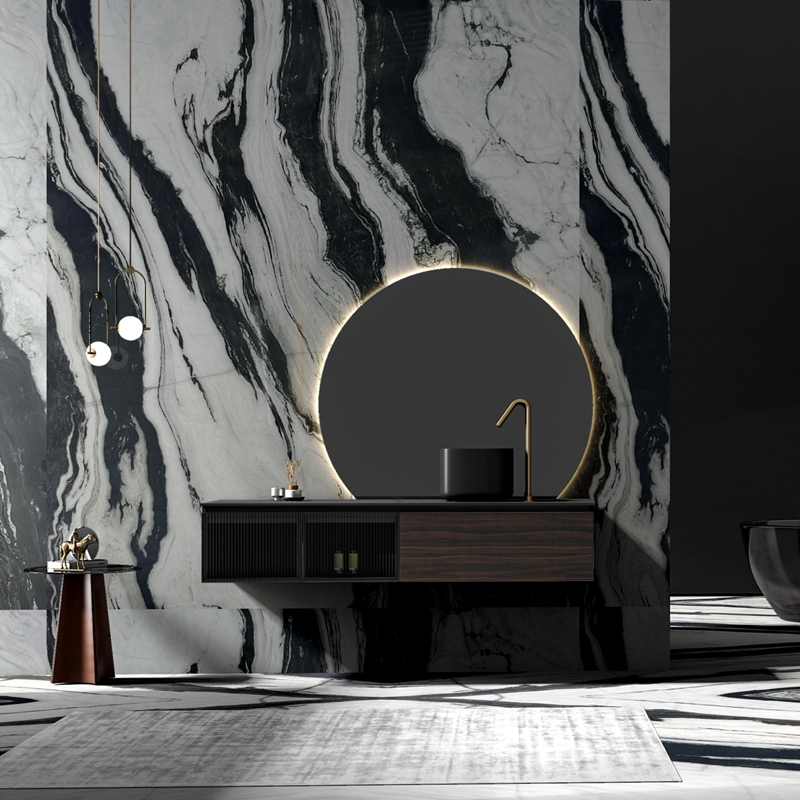
What Is White Marble? Origins, Composition, and Key Varieties
Geological Formation and Mineral Characteristics
White marble is a metamorphic rock formed when limestone or dolomite undergoes recrystallization under intense heat and pressure deep within the Earth’s crust. This process transforms the original carbonate minerals into interlocking calcite crystals—pure calcite being naturally white, so minimal impurities yield the stone’s signature brightness. Trace elements like graphite, mica, or iron oxides introduce subtle grey veining or tonal variation, giving each slab a distinct character. With a Mohs hardness of approximately 3, white marble is softer than granite, influencing both its workability and long-term maintenance requirements. Its geological origin ensures no two slabs are identical—a hallmark of authenticity and natural artistry.
Top White Marble Types: Carrara, Calacatta, Statuario, and Thassos
Architects and designers consistently turn to four iconic white marbles for their balance of aesthetic distinction and functional performance. Carrara (Italy) features a soft white ground with fine, feathery grey veins—ideal for minimalist kitchens and bathrooms. Calacatta (also Italian) commands attention with a bright white field and bold, high-contrast veining, often specified for statement islands and feature walls. Statuario, rarer and more luminous than Calacatta, offers refined, sparse grey streaks on a radiant white base—favored for luxury bathrooms and sculptural elements. Thassos marble, quarried in Greece, delivers near-pure crystalline whiteness with virtually no veining, achieving a mirror-like polish prized in high-end spas and mosaic applications. The table below highlights their defining traits.
| Marble Type | Origin | Background Color | Veining Style | Typical Application |
|---|---|---|---|---|
| Carrara | Italy | Soft white | Fine, linear grey | Flooring, countertops |
| Calacatta | Italy | Bright white | Bold, thick grey | Feature walls, statement islands |
| Statuario | Italy | Luminous white | Delicate, sparse grey | Luxury bathrooms, sculptures |
| Thassos | Greece | Pure crystalline white | Virtually absent | High-end spas, mosaics |
Selection hinges on design intent and usage context: bolder veining adds visual drama but may highlight wear, while purer whites demand greater vigilance against etching and staining.
White Marble in Architecture and Interior Design
Residential Applications: Countertops, Flooring, and Feature Walls
White marble elevates residential interiors with timeless luminosity and organic sophistication. In kitchens, countertops reflect ambient light, enhancing spatial perception and pairing seamlessly with minimalist cabinetry—especially Carrara’s restrained elegance. Bathrooms benefit from its spa-like serenity: vanity tops and flooring in Statuario or Thassos create a calm, monolithic feel, while natural veining ensures visual uniqueness without repetition. Living room feature walls—particularly behind fireplaces—leverage marble’s depth and texture as architectural anchors. Its neutral chromatic range harmonizes effortlessly with warm woods, cool metals, and monochromatic palettes. Though porous, white marble performs reliably in family homes when properly sealed and maintained—proving that beauty and practicality need not be mutually exclusive.
Commercial and Luxury Projects: Hotels, Lobbies, and High-End Retail
In premium commercial environments, white marble communicates permanence, refinement, and elevated experience. Large-format tiles establish uninterrupted, glossy flooring in hotel lobbies—impressing guests through scale, sheen, and material integrity. High-end retail spaces use it for counters, wall cladding, and reception desks to reinforce brand prestige and tactile distinction. Its high light-reflectance index enhances perceived spaciousness and supports flexible lighting strategies in dynamic public areas. According to industry benchmarks cited by the Marble Institute of America, white marble appears in over 70% of five-star hotel renovation specifications—primarily for flooring, elevator surrounds, and decorative panels—valued equally for aesthetics and long-term durability when professionally maintained.
Practical Considerations: Durability, Maintenance, and Stain Resistance
Understanding Porosity and Etching Risks with Acidic Substances
White marble’s crystalline structure renders it naturally porous, absorbing 0.2–0.5% of its weight in water (Marble Institute of America, 2023). While sealing mitigates liquid penetration, the greater vulnerability lies in etching: acidic substances—including lemon juice, wine, vinegar, and even some cleaning agents—react instantly with calcium carbonate, dissolving surface crystals and leaving dull, matte marks. Research by the Natural Stone Institute confirms undiluted vinegar can etch Carrara marble within 30 seconds (NSI, 2022). Unlike staining, which affects subsurface color, etching alters the physical finish—making prevention through immediate spill response and pH-appropriate care non-negotiable.
Best Practices for Cleaning, Sealing, and Long-Term Preservation
Daily care requires only a pH-neutral stone cleaner—never vinegar, citrus-based solutions, or abrasive powders. Blot spills immediately; wiping spreads contaminants deeper into pores. Use coasters, trivets, and felt pads to protect surfaces from moisture and impact. Apply a high-quality impregnating sealer annually—or biannually in kitchens and high-traffic zones—to slow absorption without altering appearance. Data from the Stone Fabricators Alliance (2023) shows properly sealed countertops resist staining 40% longer than unsealed counterparts. For oil-based stains, a baking soda poultice draws out residue effectively; for etching, professional honing and polishing restore luster—underscoring marble’s unique capacity for in-place renewal. With disciplined upkeep, white marble not only endures but evolves gracefully, developing a soft, luminous patina that reflects decades of thoughtful use.
White Marble vs. Alternatives: When to Choose Natural Stone Over Quartz or Porcelain
Choosing white marble over engineered alternatives depends less on convenience and more on intention: does the project prioritize irreplaceable natural character, restorability, and legacy value? Quartz offers consistent patterning and near-zero porosity—ideal for heavy-use kitchens—but lacks depth, warmth, and the ability to recover from surface damage. Porcelain excels outdoors and in wet areas due to UV stability and freeze-thaw resistance, yet it cannot replicate marble’s optical complexity or tactile richness. Critically, marble is the only material among the three that can be refinished in situ: scratches, etches, and dullness are corrected through honing and polishing—not replacement. Over a 30-year lifecycle, this renewability offsets higher initial maintenance, avoiding the full-slab replacement costs inherent to quartz or porcelain failures. For luxury residential and landmark commercial projects where authenticity, timelessness, and material storytelling matter most, white marble remains unmatched—not despite its demands, but because those very qualities affirm its enduring authority.
Frequently Asked Questions (FAQs)
What is white marble made of?
White marble is composed primarily of recrystallized calcite from limestone or dolomite, with trace elements like graphite or iron oxides causing veining and tonal variations.
How durable is white marble compared to granite?
White marble is softer than granite, with a Mohs hardness of 3, making it less resilient to scratches and wear but easier to work with for sculpting and fine detailing.
What are the top types of white marble?
Popular varieties include Carrara, Calacatta, Statuario, and Thassos, each offering unique veining styles and color purity suited to different applications.
How do you maintain white marble?
Regular cleaning with pH-neutral stone cleaners, immediate spill blotting, and annual sealing are essential for preserving its finish and preventing stains and etching.
Why choose white marble over quartz or porcelain?
White marble offers unmatched natural beauty, restorative potential through honing and polishing, and a legacy value that alternatives like quartz and porcelain cannot replicate.