 EN
EN

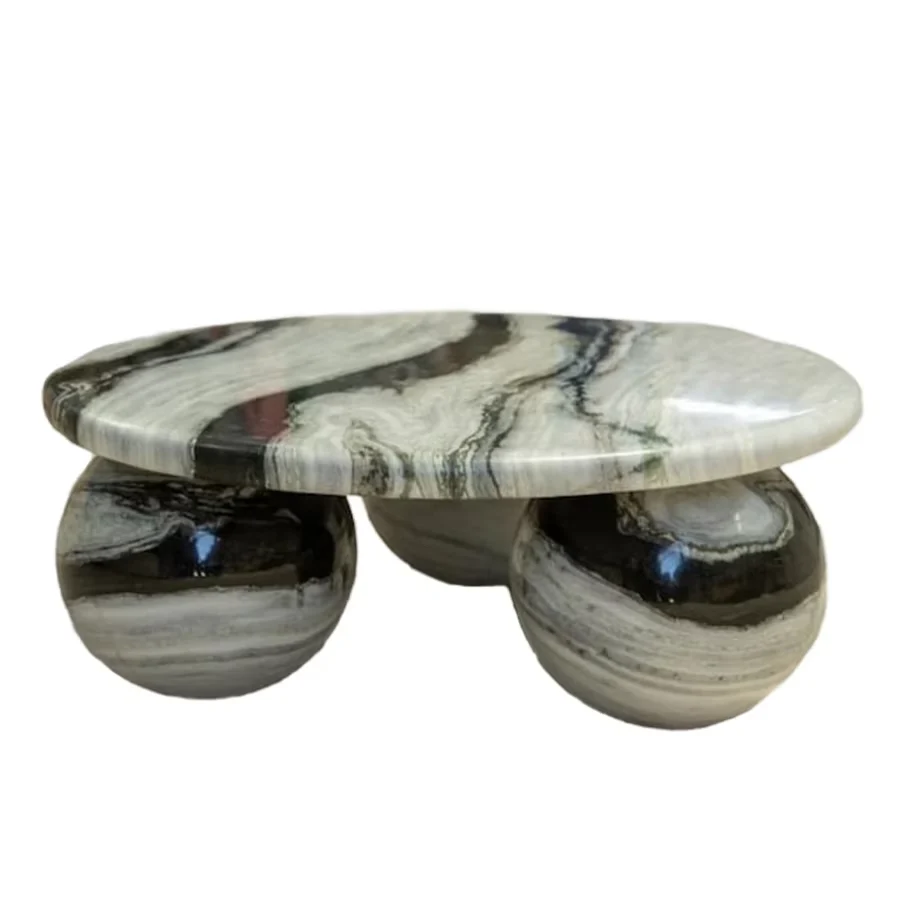
Understanding Marble Table Wear Resistance Through Material Science
A marble table must endure daily abrasion, impact, and thermal stress; its long-term durability hinges on intrinsic physical and chemical properties. Two primary factors govern wear resistance: the stone’s Mohs hardness rating and the microstructural integrity determined by its crystal composition. Evaluating both reveals how well a surface will retain its polish under real-world conditions.
Mohs Hardness and Microstructural Integrity of Natural Marble
Marble’s inherent wear resistance begins with its mineralogical rating. On the Mohs scale, most marbles fall between 3 and 4—soft enough to be scratched by a steel knife (5.5) but resistant to softer materials like fingernails or plastic utensils. However, hardness alone is insufficient. Microstructural integrity—the grain size, bond strength between calcite or dolomite crystals, and uniformity of veining—plays an equally critical role. A marble table with fine, interlocking grains resists scratching more effectively than a coarsely crystalline variety, even at identical Mohs values. As confirmed by ASTM C241‑22 abrasion testing, densely compacted marble specimens exhibit lower wear rates due to fewer micro-fractures at grain boundaries. This internal coherence not only preserves surface polish but also limits micro-crack propagation—key to long-term performance in high-use settings.
How Crystal Composition Affects Scratch and Abrasion Resistance
The specific minerals within marble dictate its vulnerability to wear. While most marble is composed primarily of calcite (calcium carbonate), dolomitic varieties contain magnesium carbonate, which increases hardness and reduces acid sensitivity. Calcite crystals align along rhombohedral cleavage planes, making them more prone to directional abrasion. Dolomite crystals form a tighter interlock, delivering up to 20% higher abrasion resistance in standardized wear tests. Independent ASTM C1353‑22 testing shows dolomitic marble surfaces retained up to 30% more gloss after 1,000 abrasion cycles compared to standard calcite slabs. Visually striking veins composed of quartz or graphite introduce zones of differential hardness—often becoming focal points for uneven wear. For homeowners, selecting a marble table with a uniform, fine-grained structure ensures scratches remain less visible and polishing remains consistent over time.
Comparing Marble Table Varieties: Calacatta, Carrara, and Dolomitic Types
Wear Performance Differences in High-Use Environments (ASTM C241-22 Data)
Selecting the ideal marble table for high-traffic areas requires understanding material-specific wear resistance. Under ASTM C241-22—the industry-standard abrasion resistance test—dolomitic marbles consistently outperform calcitic varieties like Calacatta and Carrara. The following table illustrates typical abrasive wear indices (lower values indicate superior durability):
| Marble Type | Composition | ASTM C241-22 Wear Index (avg. mm³) | Typical High-Use Suitability |
|---|---|---|---|
| Carrara (Calcitic) | CaCO₃ dominant | 24–28 | Moderate, prone to scratching |
| Calacatta (Calcitic) | CaCO₃ with bold veining | 26–30 | Low, best for decorative use |
| Dolomitic Marble | MgCO₃ content >15% | 14–18 | High, withstands abrasion well |
These differences arise from dolomite’s magnesium carbonate lattice, which provides greater hardness and resistance to abrasive wear than calcium carbonate. In kitchen or dining settings where cutlery, ceramics, and heavy objects frequently contact the surface, a dolomitic marble table maintains its finish significantly longer. While no natural stone is impervious to wear, this data guides specifiers toward dolomitic options when longevity under heavy use is a priority. Regular sealing further mitigates surface erosion, helping the marble table retain its elegance despite demanding conditions.
Sealing and Surface Protection Strategies for Long-Term Marble Table Durability
Penetrating Silane vs. Topical Sealers: Efficacy and Aesthetic Trade-offs
Protecting a marble table begins with understanding how sealers interact with the stone’s porous structure. Two primary categories dominate: penetrating sealers (typically silane- or siloxane-based) and topical coatings. Penetrating formulations chemically bond within the capillary pores, creating a hydrophobic barrier that repels water, oils, and mild acids without altering texture or natural gloss. In contrast, topical sealers—often acrylic or polyurethane—form a surface film that enhances shine but may trap acidic substances beneath if chipped, increasing risk of sub-surface etching over time. The choice involves trade-offs in appearance, durability, and maintenance:
| Feature | Penetrating Silane Sealers | Topical Coatings |
|---|---|---|
| Protection mechanism | Absorbs into pores, chemical bond | Surface film, physical barrier |
| Visual impact | Invisible, retains natural matte/gloss | Adds slight gloss or “wet look”; can yellow with UV |
| Scratch resistance | No surface layer to scratch | Film may show wear patterns and require re-coating |
| Stain prevention | Effective against water‑ and oil‑based spills | Effective initially but vulnerable if barrier breached |
| Reapplication | Every 1–3 years (water‑drop test) | As needed when film degrades; often more frequent |
| Best suited for | Dining, coffee, and console tables with organic contact | Commercial tabletops or areas where a sacrificial layer is preferred |
Penetrating sealers preserve the stone’s tactile authenticity—critical for luxury tables—while topical films risk compromising that integrity. For most residential marble tables, a silane sealer is recommended, balancing reliable protection with the aesthetic demands of high-end interior design.
Best Practices for Maintaining Natural Luster Without Compromising Wear Resistance
Sustaining a marble table’s elegance requires a routine that defends against abrasion while highlighting the stone’s innate sheen. Use only pH-neutral cleaners to avoid chemical etching, and immediately blot—not wipe—spills to prevent absorption. Place coasters under beverages and felt pads beneath decorative items. Re-seal the surface using a penetrating silane sealer whenever water no longer beads—a simple test indicating reapplication is needed every 1–3 years, depending on usage intensity. For daily care, lightly dust with a microfiber cloth; never use abrasive pads, powdered cleansers, or acidic polishes. Avoid wax-based topical enhancers, which build up over time and obscure the marble’s crystalline depth. These practices preserve a scratch-resistant finish and sustain a subtle, enduring glow reflective of thoughtful, damage-aware stewardship.
Environmental and Behavioral Factors That Influence Marble Table Wear Over Time
While a marble table's mineral composition and protective sealants provide a strong foundation for durability, real-world conditions and daily habits ultimately dictate how gracefully it ages. Environmental stressors—such as prolonged exposure to high humidity or direct sunlight—can gradually weaken surface treatments. Elevated moisture levels encourage water absorption in micro-pores, potentially leading to efflorescence or deeper staining in poorly sealed marble. Similarly, repeated thermal cycling from hot serving dishes placed directly on the stone may induce micro-fissures over time, compromising structural integrity.
User behavior also plays a decisive role. Abrasive cleaning methods accelerate polish erosion and expose raw calcite to etching agents. Even incidental contact with common acidic substances—citrus juice, vinegar-based dressings, or spilled wine—can cause immediate chemical dulling if not blotted within minutes. Sealant breakdown accelerates in high-traffic dining areas, making consistent reapplication essential for sustained defense. Simple precautions—like using felt pads under decorative items and coasters beneath glassware—significantly slow cumulative wear and help preserve the table’s natural luster for decades.
Frequently Asked Questions
What is the Mohs hardness scale and why is it crucial for marble tables?
Mohs hardness measures the scratch resistance of materials on a scale from 1 to 10. For marble tables, this rating indicates vulnerability to everyday abrasions and helps assess durability.
How does dolomitic marble resist wear better than calcitic marble?
Dolomitic marble contains magnesium carbonate, which increases hardness and forms a tighter crystal lattice, reducing vulnerability to abrasion and retaining surface polish longer.
How do sealers help protect marble tables?
Sealers, such as penetrating silane or topical coatings, create barriers against water, oils, and acids, preventing stains and enhancing durability. Penetrating sealers maintain the stone's natural look, while topical coatings add gloss.
What maintenance practices prolong the life of marble tables?
Use pH-neutral cleaners, avoid abrasive cleaning pads, promptly blot spills, use coasters and felt pads, and reapply penetrating sealer whenever water no longer beads on the surface.
How does environmental exposure affect marble surfaces?
High humidity, sunlight, and thermal cycling can weaken sealant protection and introduce micro-fissures, causing wear over time. Regular maintenance mitigates these effects.
Table of Contents
- Understanding Marble Table Wear Resistance Through Material Science
- Comparing Marble Table Varieties: Calacatta, Carrara, and Dolomitic Types
- Sealing and Surface Protection Strategies for Long-Term Marble Table Durability
- Environmental and Behavioral Factors That Influence Marble Table Wear Over Time
-
Frequently Asked Questions
- What is the Mohs hardness scale and why is it crucial for marble tables?
- How does dolomitic marble resist wear better than calcitic marble?
- How do sealers help protect marble tables?
- What maintenance practices prolong the life of marble tables?
- How does environmental exposure affect marble surfaces?