 EN
EN

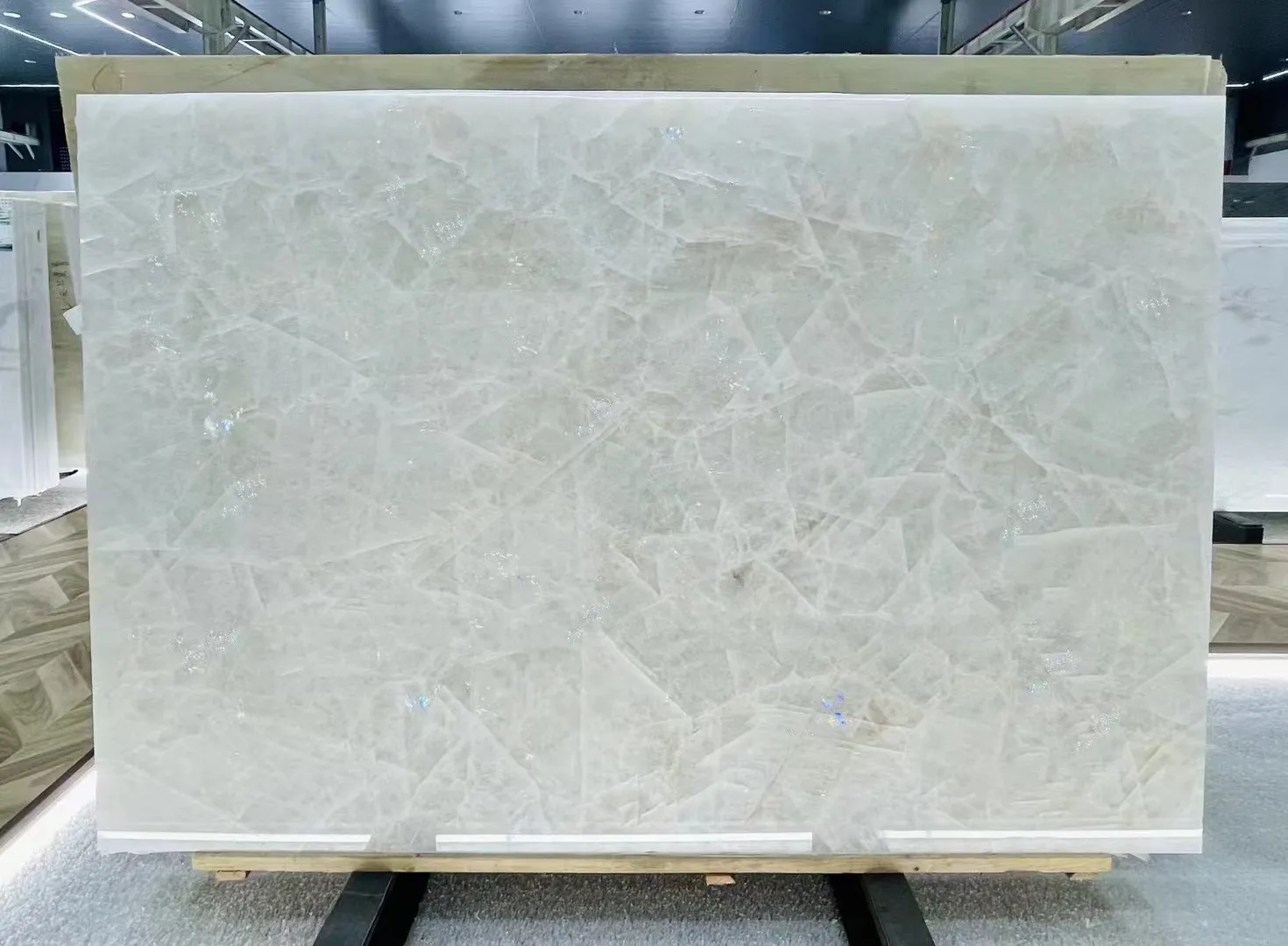
Core Properties of White Marble: Veining, Durability, and Suitability
Veining, Tone, and Undertones: Carrara vs. Calacatta Oro vs. Arabescato
Carrara white marble features soft, feathery gray veining on a light gray or white base, with cool blue-gray undertones—ideal for minimalist kitchens or serene bathrooms where visual calm is key. Calacatta Oro stands out with bold, thick gold or beige veins against a bright white background, delivering warm, creamy undertones that signal luxury; it excels as a statement island or feature wall. Arabescato offers dramatic dark gray to black veining in sweeping, intricate patterns over a neutral-to-cool white base—perfect for modern spaces seeking sculptural impact. While all three are white marbles, their veining scale and tone directly affect spatial perception: Carrara’s fine lines enhance airiness in small rooms; Calacatta Oro’s contrast adds grandeur; Arabescato’s depth grounds and defines space. Designers often pair cool-toned Carrara with stainless steel, while Calacatta Oro complements brass fixtures.
Durability & Porosity Spectrum: Statuario, Bianco Dolomite, and Thassos Compared
Statuario white marble boasts a luminous, uniform white surface with delicate gray veins—but its relatively soft Mohs hardness (3–4) and high porosity demand vigilant sealing to resist staining and etching from acidic liquids. Best suited for low-traffic vertical applications like fireplace surrounds, its calcite-rich composition limits durability in high-use zones. Bianco Dolomite, a dolomitic marble, offers greater hardness and markedly lower porosity due to its magnesium-rich structure—making it more resistant to acid attack and better suited for kitchen countertops. It typically appears in soft ivory tones with subtle veining, balancing resilience with quiet warmth. Thassos, quarried in Greece, is the densest and least porous of the three, thanks to its crystalline dolomitic makeup. With a water absorption rate below 0.1% (per ASTM C97), it excels in wet environments like steam showers and vanity tops—though its density increases brittleness during fabrication. Choose Statuario for uncompromising aesthetics with attentive care, Bianco Dolomite for balanced performance in everyday kitchens, and Thassos for pristine, long-lasting whiteness in moisture-prone areas.
White Marble for Kitchens: Prioritizing Performance Without Sacrificing Elegance
Countertops: Calacatta Oro vs. Carrara for Stain Resistance and Daily Wear
Both Calacatta Oro and Carrara are calcium carbonate stones vulnerable to etching from acids like lemon juice or vinegar—and neither is inherently stain-resistant without proper protection. Calacatta Oro’s denser crystalline structure may resist deep scratches slightly better than Carrara, but its bold, high-contrast veins make minor etches and wear more visible. Carrara’s softer, feathery patterning helps camouflage light surface damage, offering greater visual forgiveness in high-traffic kitchens. Ultimately, stain resistance depends less on variety and more on consistent maintenance: a high-quality penetrating sealer applied annually forms an effective barrier against oil- and water-based spills, and immediate cleanup remains essential. Families prioritizing practicality often choose Carrara; those embracing drama and willing to commit to rigorous upkeep opt for Calacatta Oro.
Backsplashes and Flooring: Honed vs. Polished Finishes for Safety and Light Control
A honed finish delivers a matte, velvety surface with superior slip resistance—making it the safer, more practical choice for kitchen flooring. Its low sheen also conceals scratches, etching, and daily wear far better than polished stone. In contrast, a polished finish maximizes light reflection, enhancing brightness in dim corners and amplifying perceived space—ideal for backsplashes, where safety isn’t a concern and visual impact matters most. For flooring, honed marble reduces glare and masks foot traffic; polished floors, though striking, become dangerously slick when wet and highlight every mark. Combining both finishes thoughtfully—honed tiles underfoot, polished slab on the wall—creates layered functionality and refined light dynamics.
White Marble for Bathrooms: Managing Moisture, Reflectivity, and Long-Term Integrity
In bathrooms, constant humidity and direct water exposure demand a material that unites aesthetic refinement with functional resilience. The right white marble—paired with appropriate sealing—can elevate a wet space into a luminous, enduring sanctuary.
Vanity Tops and Shower Walls: Why Thassos Is Ideal for Wet Zones
Thassos marble is widely regarded as the optimal white marble for wet environments due to its exceptionally low porosity and crystalline purity. With a water absorption rate below 0.1% (ASTM C97), it naturally resists moisture penetration, significantly lowering risks of mold growth, staining, or structural degradation. Its brilliant white surface reflects up to 95% of ambient light—making even windowless bathrooms feel expansive and serene. When sealed annually with a breathable water-repellent, Thassos remains virtually maintenance-free. A honed finish further enhances its practicality by providing subtle slip resistance. Unlike more veined marbles prone to etching or discoloration in humid conditions, Thassos delivers consistent luxury and long-term integrity—proving white marble can thrive where other natural stones falter.
White Marble for Living Rooms and Bedrooms: Design Harmony Through Tone and Scale
Feature Walls and Flooring: Matching White Marble Patterns to Space and Light
White marble transforms living rooms and bedrooms into luminous, gallery-like settings when pattern, scale, and undertone align with the room’s proportions and natural light. Large-format slabs with linear, subtle veining—especially in book-matched installations—create horizontal continuity that visually expands narrow or elongated spaces. Bold, dramatic veining, by contrast, anchors a room as a powerful focal point, harmonizing beautifully with soft textiles and warm timber accents. For flooring, a honed finish maintains the stone’s luminosity while minimizing glare—ideal for sun-drenched open-plan areas. Crucially, selecting a marble with a consistent undertone—whether cool gray or warm beige—ensures tonal cohesion across walls, floors, and furnishings, fostering a calm, unified atmosphere.
FAQs
1. What makes Thassos marble ideal for bathrooms?
Thassos marble is highly resistant to moisture due to its low porosity and crystalline purity. Its water absorption rate below 0.1% significantly reduces risks like mold growth and staining, making it perfect for wet bathroom zones.
2. Is white marble suitable for kitchen countertops?
White marble can be used for kitchen countertops, but it requires regular sealing and maintenance to prevent staining and etching. Some varieties, like Bianco Dolomite, offer better durability and resistance compared to softer marbles like Statuario.
3. How do honed and polished finishes differ?
Honed finishes are matte and provide better slip resistance, ideal for flooring, while polished finishes are glossy and enhance light reflection, making them perfect for backsplashes and maximizing brightness.
4. What is the best type of white marble for high-traffic areas?
Bianco Dolomite is a great choice for high-traffic areas due to its higher durability and lower porosity compared to other white marbles.
5. How often should white marble be sealed?
White marble typically needs to be sealed annually to maintain its resistance against stains and etching.
Table of Contents
- Core Properties of White Marble: Veining, Durability, and Suitability
- White Marble for Kitchens: Prioritizing Performance Without Sacrificing Elegance
- White Marble for Bathrooms: Managing Moisture, Reflectivity, and Long-Term Integrity
- White Marble for Living Rooms and Bedrooms: Design Harmony Through Tone and Scale
- FAQs