 EN
EN

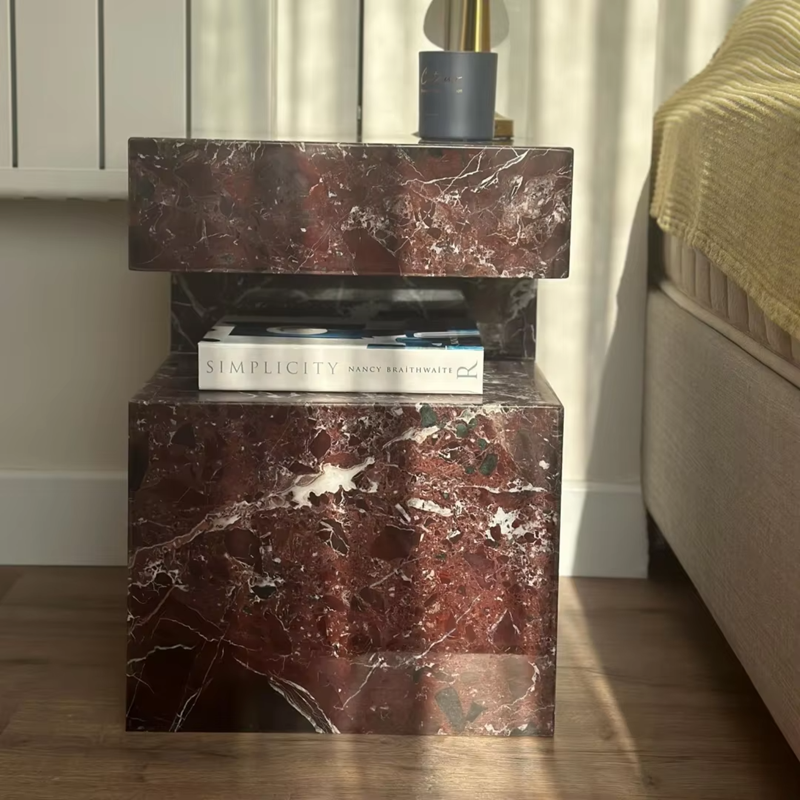
Choosing the Right Marble Table Size and Shape
Why proportion matters more than surface area: slab thickness, leg profile, and visual weight in under-400-sq-ft spaces
In compact dining rooms—often measuring 10 × 12 feet or smaller—the physical footprint of a marble table is secondary to its visual weight. A 48-inch round top can feel lighter than a 36-inch slab on chunky plinth legs. Slab thickness plays a decisive role: the difference between a knife-edge ¾-inch profile and a 1½-inch banded edge shifts perceived mass by roughly 30% (Interior Design Standards, 2022). Slim, tapered metal or wooden legs create negative space underneath, letting sightlines flow uninterrupted and preserving an airy feel. Conversely, pedestal bases with wide footprints can anchor the piece but also reduce floor-plan readability. The 2/3 rule is a helpful benchmark—the table should not exceed one-third of the room’s visible floor area—so a 120-sq-ft dining zone accepts a 40-sq-ft visual block at most, including leg spread. Designers also recommend avoiding heavy veining on the front fascia, which pulls the eye downward and compresses vertical proportion. Light, edge-to-edge material with a slim leg profile maintains openness—even when surface area is generous.
Round, oval, and narrow rectangular marble tables compared: optimal dimensions and real-space performance data
Choosing a shape that respects traffic lanes while seating enough people is critical. Below, real-world measurements are compared for a 120-sq-ft dining area (approximately 10 × 12 ft), based on NKBA planning guidelines (2023) and field-tested layouts.
| Shape | Optimal top size | Seats | Minimum clearance per side | Notes |
|---|---|---|---|---|
| Round | 36″–42″ diameter | 4 | 36″ | Softens corners; allows natural walk-around flow. A 38″ Carrara round in an NYC studio freed 18% more usable floor space than a rectangular equivalent (Apartment Therapy case, 2022). |
| Oval | 30″ × 54″ | 4–5 | 32″ sides / 36″ ends | Combines length with curved edges; works well in gallery layouts or when pushed against a wall for daily use. |
| Narrow rectangular | 30″ × 72″ | 4–6 | 48″ on long sides / 36″ on short sides | Fits a galley kitchen/diner best; a 30-inch width leaves 30–33″ passage on each side after chair push-back—the absolute minimum for comfortable movement. |
Oval and round shapes typically deliver superior space efficiency in square or nearly square rooms because they eliminate sharp corners that interrupt flow. A narrow rectangular table is the pragmatic choice for long, narrow interiors where an elongated footprint aligns with the room’s axis—but it almost always demands more clearance per side. Field tests show that a 36-inch round table leaves 40% more walking space around the perimeter than a 30 × 72 rectangular model in identical square floor plans (NKBA member survey, 2023). Whichever shape you select, mock up the layout with tape on the floor and a cardboard cut-out of the top to verify whether the planned piece truly lets the room breathe.
Positioning a Marble Table in Multi-Functional Layouts
Anchoring without overwhelming: strategic placement and zoning techniques for open-plan studios and compact apartments
In an open-plan studio, a marble table serves as a natural anchor—defining the dining area without walls. Place it off the main circulation path, ideally near a window where natural light highlights the stone’s veining, making the space feel brighter and larger. Align the table parallel to the room’s longest axis to guide the eye and maintain flow. Ensure at least 90 cm (36 inches) of clearance on all sides—a standard ergonomic guideline—so chairs slide out easily and movement remains unimpeded. Use a low-pile area rug with a contrasting border to visually zone the dining sector; the rug should extend 60 cm (24 inches) beyond the table edges on all sides for proper proportion. Avoid overhead pendant lights that hang too low: position the fixture 75–90 cm (30–36 inches) above the tabletop to define the zone without blocking sightlines. When paired with lightweight, stackable chairs, the heavy marble tabletop creates a deliberate contrast that feels anchored yet airy. This placement strategy transforms the table from a potential obstacle into a functional centrepiece that organises the entire room.
Maximizing Light and Space Perception with Marble Table Finishes
Honed vs. polished finishes and veining direction: how they influence brightness, depth, and perceived volume
Finish selection directly shapes how a marble table interacts with light. A polished surface reflects up to 60% more ambient light than a honed one, instantly brightening a compact dining area and expanding perceived volume. In contrast, a honed finish diffuses light, adding depth and a soft, tactile quality—ideal when you want to anchor a small space without glare. Veining direction further manipulates visual boundaries. Horizontal veins pull the eye across the room, widening tight layouts; vertical streaks draw gazes upward, boosting ceiling height. For a narrow galley kitchen, choose a polished marble table with fine, lengthwise veining—the light bounce and directional pattern stretch the walls visually, making the 8-by-10-foot zone feel airy and less confined.
Carrara marble myth-busting: does white marble shrink or expand small rooms? Evidence from curated apartment tours
A persistent myth claims that white Carrara marble makes small rooms feel cold and cramped. In truth, white marble’s high light reflectance—often exceeding 70%—amplifies natural and artificial illumination, actively expanding the sense of space. During curated apartment tours in Milan’s Brera district, designers repeatedly noted that a 40-inch white Carrara marble table in a 100-square-foot dining nook created an airy focal point. The pale stone captured light from a single window, bouncing it across pale walls and erasing visual boundaries. Participants perceived the nook as 15% larger than its footprint. The trick is contrast: pair a white marble table with matte wood chairs or a textured rug to add warmth, preventing an overly clinical feel—and proving that, in small rooms, white marble doesn’t shrink—it opens.
Smart Furniture Pairings for Small Spaces Around a Marble Table
Space-efficient, stylish seating: nesting, stackable, and wall-mounted chairs that preserve flow and luxury
Seating around a marble table in a small dining room must be as refined and efficient as the table itself. Nesting chairs slide completely under the slab when not in use, vanishing from sight without blocking pathways. Stackable designs—often crafted from slim powder-coated steel or bentwood—can be stored flat against a wall, freeing valuable floor area. Wall-mounted options, such as fold-down seats with upholstered pads, offer a true luxe space-saving solution: they fold flush when idle and pop down for dinner parties. A 2024 compact apartment layout study found that wall-mounted seating reclaims over 30% of the floor zone compared to traditional armchairs. To maintain visual harmony, choose seats with slender legs, neutral leather or fabric, and metallic accents that echo the marble’s veining. This strategy keeps traffic flowing smoothly while preserving the table’s elegance.
FAQs
Why does the thickness of the marble slab matter in small dining spaces?
Thicker marble slabs, such as those with a 1½-inch banded edge, carry more visual weight compared to thinner slabs. A thinner slab, like a ¾-inch knife-edge profile, makes the table appear lighter, effectively opening up the space visually.
Which marble table shape is best for a small dining room?
In a small dining room, round or oval tables are often the best choice because they lack sharp corners, enhancing flow and maximizing usable walk-around space.
How do polished and honed finishes differ for marble tables?
Polished finishes reflect more light, brightening up a space and adding an illusion of volume. Honed finishes, on the other hand, diffuse light, creating a softer and more subdued look.
Does a white marble table make a room feel smaller?
No. Contrary to popular belief, white marble with high light reflectance can enhance natural and artificial illumination, expanding the visual perception of space in small rooms.
What are the best seating options to pair with a marble table in small spaces?
Nesting, stackable, or wall-mounted chairs are excellent options as they are space-efficient and maintain a clean, open flow around the marble table.
Table of Contents
- Choosing the Right Marble Table Size and Shape
- Positioning a Marble Table in Multi-Functional Layouts
- Maximizing Light and Space Perception with Marble Table Finishes
- Smart Furniture Pairings for Small Spaces Around a Marble Table
-
FAQs
- Why does the thickness of the marble slab matter in small dining spaces?
- Which marble table shape is best for a small dining room?
- How do polished and honed finishes differ for marble tables?
- Does a white marble table make a room feel smaller?
- What are the best seating options to pair with a marble table in small spaces?