 EN
EN

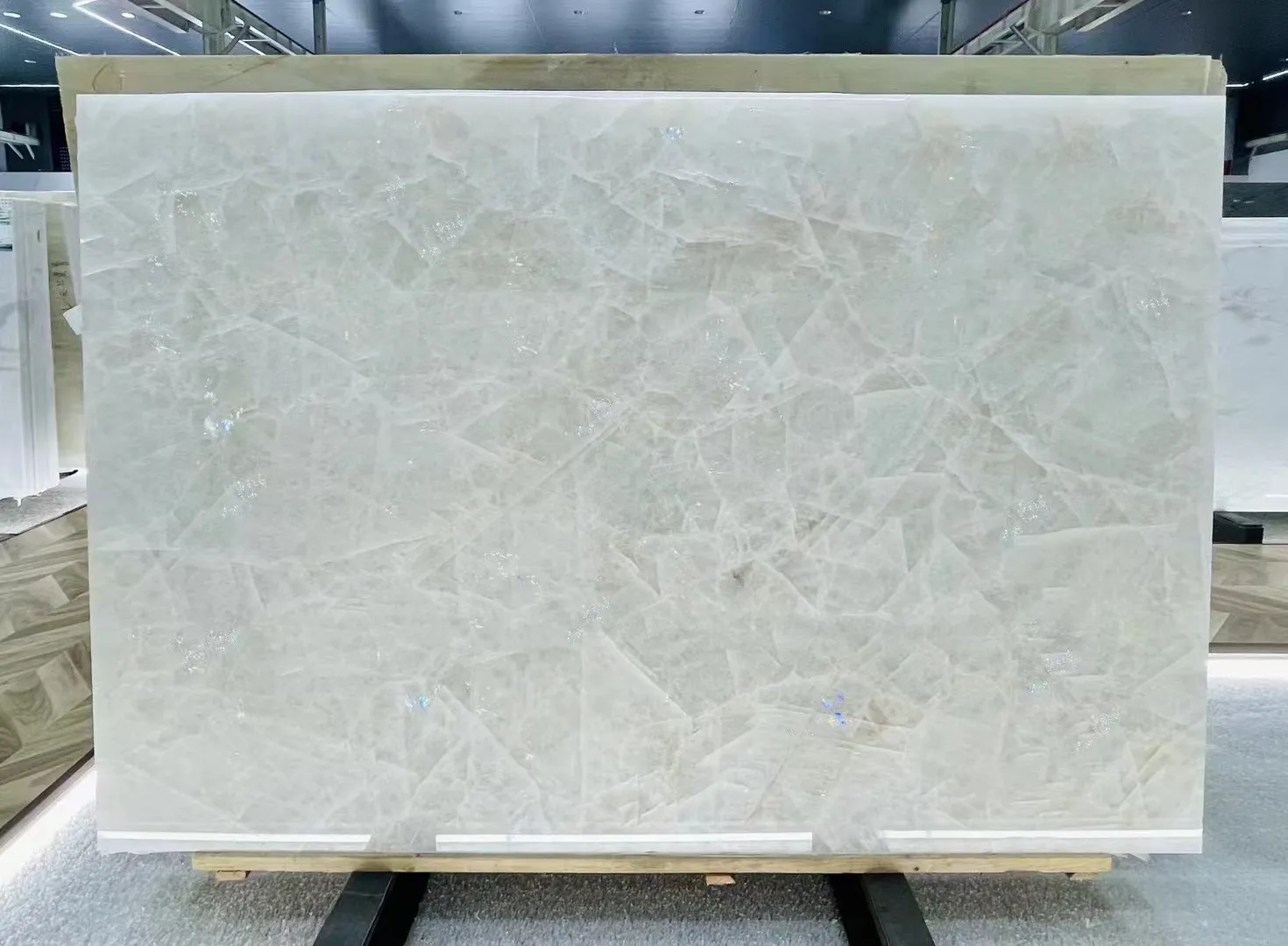
Proven Expertise: Decades of Quarry Access and Material Mastery
Deep Knowledge of Marble Varieties, Veining Patterns, and Structural Behavior
An experienced marble supplier brings decades of direct quarry access—translating into a nuanced, field-tested understanding of material behavior. This expertise is built on evaluating thousands of blocks and slabs across global quarries, not theoretical study. The supplier distinguishes calcite-dominant marbles like Carrara—softer, more porous, and acid-sensitive—from dolomitic variants such as Thassos, which deliver greater hardness and chemical resilience. Crucially, veining patterns are interpreted not just aesthetically but structurally: subtle hairline veins in Statuario often signal potential fracture planes under tension, while bold, continuous networks in Calacatta typically indicate superior slab stability. This insight enables pre-selection of blocks that meet both visual continuity and mechanical performance requirements—reducing on-site breakage and fabrication waste by up to 30% in benchmarked projects.
| Marble Variety | Dominant Veining Pattern | Typical Structural Behavior | Common Global Applications |
|---|---|---|---|
| Carrara White | Soft, feathery gray veins | Moderate porosity, good compressive strength, sensitive to acids | Flooring, bathroom vanities, sculptures |
| Calacatta Gold | Bold, dramatic gold/beige veins | Dense structure, low water absorption, high flexural strength | Feature walls, countertops, luxury lobbies |
| Statuario | Fine, discontinuous gray veins | Variable—can be brittle along vein lines; requires careful handling | Statement pieces, high-end furniture, cladding |
| Thassos White | Minimal to no veining | Extremely hard, low porosity, excellent resistance to staining | Spa environments, exterior cladding, pool decks |
This level of mastery ensures batch-to-batch consistency—not only in color and pattern but across the full performance envelope: crack resistance, thermal expansion behavior, and long-term durability across climates from humid tropics to arid deserts.
Navigating Market Cycles and Supply Volatility with Predictable Sourcing Outcomes
Beyond geology, seasoned suppliers provide stability in an industry defined by supply shocks and price volatility. Long-standing agreements with multiple quarry owners grant preferential access during peak seasons—when spot prices can surge 15–20% (industry averages, 2023). Combined with strategic buffer inventories of high-demand white and beige marbles, this network absorbs short-term disruptions without compromising delivery schedules. For example, a fixed-price 500-ton bianco marble order remains on track even if a primary quarry faces temporary output restrictions. Forecasting models—trained on decades of shipping, production, and demand data—enable precise lead-time commitments. In practice, this transforms marble procurement from a reactive, high-risk activity into a predictable, managed process that safeguards project budgets and timelines.
Reliable Execution: On-Time Delivery and Damage-Free Logistics
98.7% On-Time Shipment Rate: How Process Discipline Ensures Consistent Export Performance
A 98.7% on-time shipment rate reflects deeply embedded operational discipline—not luck. Dock scheduling aligns slab cutting, polishing, and packaging with port cutoff windows; a vetted carrier network guarantees transit reliability; and strategically placed buffer stocks at consolidation hubs absorb demand surges. Demand forecasting—powered by historical order data and seasonal trend analysis—drives production planning so slabs are ready when orders are confirmed. Real-time GPS and container tracking, integrated into a centralized logistics platform, deliver live status updates to all stakeholders, enabling proactive intervention before delays escalate. Standardized documentation—including pre-cleared packing lists, commercial invoices, and certificates of origin—is submitted electronically 72 hours before vessel departure, cutting customs clearance dwell time by two days on average. Every shipment deviation triggers a root-cause analysis, feeding a continuous improvement loop that systematically eliminates recurring bottlenecks. The result is delivery predictability that strengthens buyer trust and reduces project schedule risk.
Stone-Specific Shipping Protocols: ISPM-15 Compliance, Container Engineering, and Breakage Prevention
Marble demands shipping protocols designed for its weight, fragility, and sensitivity to moisture and shock. All wood packaging complies with ISPM-15 standards—heat-treated and stamped to prevent customs rejection. Containers are engineered for stone: slabs load vertically with foam spacers, secured using steel corner protectors and calibrated tension straps; shock-absorbing dunnage fills voids, and moisture barriers shield against condensation. High-value book-matched sets receive custom crates with internal bracing. Breakage prevention hinges on precise weight distribution—placing heavier blocks at the container floor—and forklift handling with padded booms. Desiccants control humidity during ocean voyages, and pre-shipment marine surveys verify loading compliance and issue condition reports. These protocols—refined over thousands of shipments—are codified in standard operating procedures, ensuring consistent execution. The outcome: in-transit damage consistently held below 0.3%, delivering pristine material ready for installation.
Uncompromising Quality Control: From Block Selection to Batch Certification
ASTM C503–Compliant QC Workflow: Visual Inspection, Dimensional Verification, and Third-Party SGS Reporting
A disciplined quality control workflow grounded in ASTM C503—the industry standard for marble dimension stone—separates seasoned suppliers from transactional vendors. Rigor begins at the quarry block: senior geologists conduct visual inspections to reject material with structural flaws, inconsistent veining, or chromatic aberrations before production begins. Once approved, dimensional verification becomes the next gate: digital templating and laser measurement tools confirm slab thickness (≤ ±1mm tolerance), flatness, and squareness—virtually eliminating costly on-site rework. Final validation comes via independent SGS testing, which objectively verifies water absorption, flexural strength, and abrasion resistance across the full batch—not just a sample. This third-party report provides global buyers non-negotiable assurance of conformity.
| Inspection Stage | Key Method | Purpose |
|---|---|---|
| Block Selection | Visual inspection by senior geologists | Eliminate material with veining defects, micro-fissures, or color inconsistency before production |
| Dimensional Verification | Digital templating & laser measurement | Guarantee slab thickness (≤ ±1mm tolerance), flatness, and squareness per order specifications |
| Batch Certification | Independent SGS testing & reporting | Validate physical properties (strength, absorption, abrasion) and certify full batch conformity to ASTM C503 |
This multi-tiered system embeds quality at origin—shifting the burden of proof from buyer to supplier and transforming QC from a final checkpoint into a predictive, de-risking mechanism for international projects.
Seamless Global Export Capability: Customs, Compliance, and Port Coordination
An experienced marble supplier delivers more than material—it provides a fully integrated export operation that turns cross-border logistics into a predictable, low-friction process. This capability rests on rigorous customs management: every shipment includes precisely classified HS codes, destination-compliant certificates of origin, packing lists, and commercial invoices. Documentation errors alone cause an estimated 30% of all customs delays (World Customs Organization, 2023), directly triggering demurrage charges and missed deadlines. Seasoned suppliers proactively align with evolving trade frameworks—including free trade agreements, anti-dumping duties, and environmental regulations like the Lacey Act or EU Timber Regulation—where applicable. Their in-house or partner-based customs brokerage teams pre-clear consignments and resolve queries before cargo reaches port, preventing holds due to incomplete paperwork.
Port coordination is equally deliberate. Top-tier suppliers select optimal port pairs to minimize inland transit, negotiate priority berthing windows, and synchronize loading with vessel schedules to avoid storage surcharges. For heavy stone shipments, they verify container yard lifting capacity and chassis availability matches block weight. The result is a seamless handover from quarry to forwarder—with full visibility delivered through digital tracking and real-time status updates. By embedding these capabilities end-to-end, the supplier removes friction that otherwise leads to costly supply-chain disruptions.
Risk Mitigation: How an Experienced Marble Supplier Reduces Hidden Costs
Quantifying Losses: Claims, Rejections, and Project Delays Linked to Inexperienced Suppliers
The true cost of an unreliable marble supplier extends far beyond unit price—manifesting in claims, rejections, and cascading project delays. Documentation deficiencies alone account for an estimated 30% of construction material disputes (Industry Report, 2023). These hidden costs erode margins and strain client relationships:
| Cost Category | Typical Impact | Root Cause |
|---|---|---|
| Material Rejection | 15–25% added landed cost | Dimensional inaccuracy, finish variance |
| Shipping Claims | Elevated insurance premiums | Inadequate crating, container engineering |
| Project Delay | 40–60% increased logistics costs | Supply volatility, mis-scheduled shipments |
Inexperienced suppliers often lack the integrated QC, documentation rigor, and logistical discipline needed to prevent these failures. A single rejected batch of non-compliant slabs can stall a high-end installation for weeks—triggering penalty clauses and reputational damage. By contrast, a seasoned partner mitigates risk upstream: petrographic analysis confirms geological integrity; batch-specific ASTM certification validates performance; and comprehensive documentation ensures regulatory compliance before shipment. This front-end discipline delivers predictable timelines, protected margins, and verified material integrity—turning procurement from a liability into a strategic advantage.
FAQ
What does an experienced marble supplier offer in terms of expertise?
An experienced marble supplier provides decades of knowledge in identifying material behaviors, distinguishing between marble types like calcite-based and dolomitic variants, and ensuring structural integrity through careful block selection and veining analysis.
How do seasoned marble suppliers provide supply stability?
They maintain long-standing quarry agreements and strategic buffer inventories, allowing them to mitigate disruptions and ensure predictable deliveries, even in volatile market conditions.
What measures ensure damage-free marble shipping?
Shipping protocols include ISPM-15-compliant wood packaging, shock-absorbing dunnage, moisture barriers, and calibrated load distributions that reduce breakage risk to below 0.3%.
How do suppliers ensure consistent quality in marble supply?
They adhere to ASTM C503 standards, conduct visual inspections, dimensional verifications, and obtain third-party SGS certifications for each batch.
What hidden costs are associated with inexperienced marble suppliers?
Hidden costs include material rejections, elevated shipping claims due to breakage, and project delays caused by poor documentation or supply disruptions.
Table of Contents
- Proven Expertise: Decades of Quarry Access and Material Mastery
- Reliable Execution: On-Time Delivery and Damage-Free Logistics
- Uncompromising Quality Control: From Block Selection to Batch Certification
- Seamless Global Export Capability: Customs, Compliance, and Port Coordination
- Risk Mitigation: How an Experienced Marble Supplier Reduces Hidden Costs
-
FAQ
- What does an experienced marble supplier offer in terms of expertise?
- How do seasoned marble suppliers provide supply stability?
- What measures ensure damage-free marble shipping?
- How do suppliers ensure consistent quality in marble supply?
- What hidden costs are associated with inexperienced marble suppliers?