 EN
EN

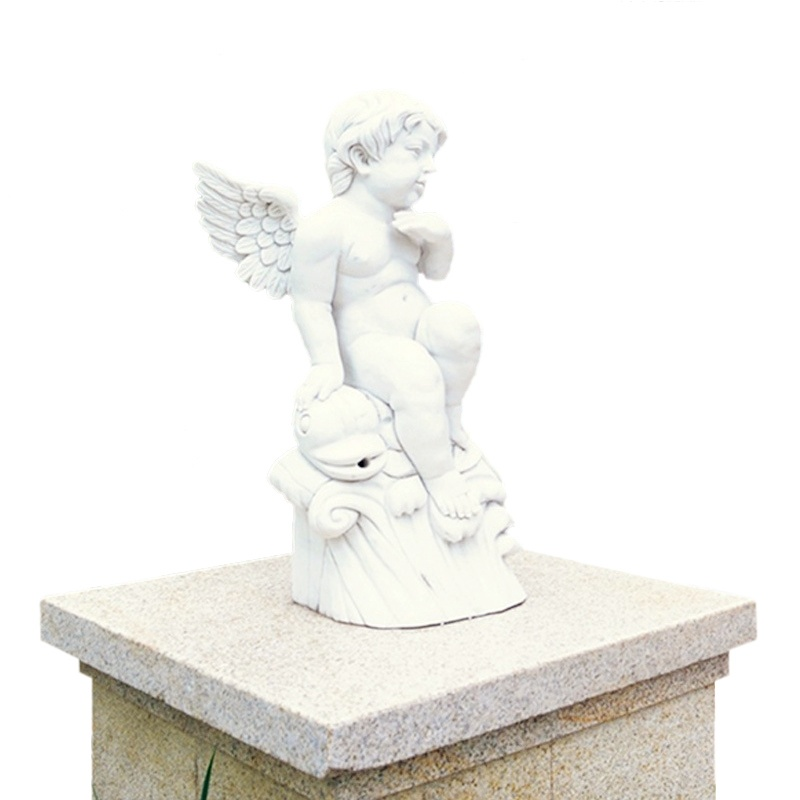
Traditional Hand-Carving Techniques and Their Impact on Marble Sculpture Quality
Roughing out with point and toothed chisels: controlling structural integrity and grain alignment
The initial roughing-out phase defines the long-term stability of a marble sculpture. Carvers use point and toothed chisels to remove bulk material while aligning cuts with the stone’s natural bedding planes—striking along the grain, not across it, to prevent unintended fractures and preserve internal cohesion. By reading veining patterns and subtle color shifts, the sculptor orients key structural elements—such as raised arms or extended drapery—parallel to the strongest grain direction. This minimizes stress concentration points that could fail during later detailing or over decades of display. A well-executed roughing sequence reduces the block’s weight by up to 70%, establishes the core silhouette, and leaves a resilient understructure—avoiding the internal weaknesses that lead to cracking or spalling in finished work.
Refining with rasps, rifflers, and abrasives: balancing surface fidelity and subsurface integrity
Once the rough form is established, rasps, rifflers, and abrasive stones refine contours and build surface texture. As detailed in the traditional marble sculptor’s toolkit, these tools cut fine grooves and progressively smooth the surface—but demand disciplined execution. Aggressive filing can overheat the stone, creating micro-fractures that compromise subsurface integrity. Sculptors therefore alternate between coarse and fine tools, modulate pressure, and allow cooling intervals. Rifflers—small, curved rasps—access concave areas without excessive force; progressively finer abrasives eliminate tool marks while avoiding the deepening of latent flaws. When properly applied, this stage reveals marble’s natural translucency and grain, enhancing visual depth while maintaining a continuous, un-stressed bond between the outer skin and sound inner core—ensuring lasting detail retention and resistance to surface degradation.
Workflow Stages and Process Discipline in Marble Sculpture Production
From maquette to full-scale pointing: minimizing dimensional error across scale transitions
A marble sculpture begins as a small maquette in clay or wax—a malleable prototype for resolving composition, anatomy, and expression before committing to stone. Transferring this design to full scale relies on either a mechanical pointing machine or high-resolution 3D scanning. Pointing machines use calibrated arms and needles to map reference points from the model onto the marble block, with calipers cross-checking depths and distances at every step. Even a 2 mm deviation can cascade into misaligned limbs or asymmetrical features. Accurate scaling is the foundational safeguard of quality; errors here compound through every subsequent operation—risking costly rework or irreversible structural flaws. Strict dimensional discipline preserves the original artistic intent and ensures structural fidelity from conception to completion.
Timing of finishing operations: preventing thermal and mechanical stress-induced veining or microfractures
Polishing and fine-detail work generate frictional heat—and applying high-speed grinding too early, before the marble has relaxed from roughing, risks thermal expansion that opens latent veining or triggers hairline cracks. A deliberate sequence—rough shaping, a rest period for stress relief, then progressive grit refinement—is essential. Delaying the final mirror polish by just 48 hours after heavy grinding reduces surface microfractures by over 30%, according to industry data from leading marble fabricators. Uneven tool pressure can also propagate subsurface damage that remains invisible until years later. Process discipline—timed pauses, consistent tool speed, and methodical layering of abrasives—not only protects against immediate flaws but safeguards the sculpture’s long-term stability, preserving its luminous surface free of crack networks.
Machine-Assisted and Digital Fabrication in Marble Sculpture: Benefits and Material-Specific Risks
CNC and robotic carving: gains in precision versus challenges of marble’s anisotropic grain and fracture behavior
CNC and robotic carving systems deliver micron-level precision and repeatability, rapidly roughing out complex forms from digital models and reducing production time and manual labor. Yet marble’s anisotropic nature—where strength and fracture toughness vary significantly with grain orientation—introduces critical constraints. A tool moving parallel to the grain encounters lower resistance; perpendicular movement risks sudden brittle fracture or chipping. Without explicit grain-aware programming, automated processes may compromise structural integrity or create repair-resistant surface defects. Successful integration requires pre-scanning the stone’s grain structure and adapting toolpaths accordingly—blending automation’s speed with the material sensitivity traditionally honed through hand-carving experience.
Toolpath planning gaps: how unmodeled grain orientation causes spalling and surface degradation
Standard CAM software often assumes material homogeneity, generating toolpaths based solely on geometry—not grain direction. For marble, this oversight leads to cutting along cleavage planes, where tool pressure splits the stone along natural fissures. The result is spalling—surface flaking that mars finish—and deeper subsurface damage requiring extensive hand remediation. Advanced workflows now incorporate 3D grain scanning prior to toolpath generation, enabling software to adjust feed rates, depth-of-cut, and tool orientation. This bridges the gap between digital precision and physical reality, preserving surface integrity and minimizing post-machining correction.
Integrating Craft and Technology for Consistent Marble Sculpture Quality
The pursuit of consistent, high-quality marble sculpture no longer hinges on choosing between tradition and technology—it rests on integrating them strategically. The most effective hybrid workflow deploys CNC machinery for the labor-intensive roughing-out stage: efficiently removing bulk material to establish primary contours and proportions, reducing human error and accelerating timelines. But marble’s brittleness and anisotropy demand a deliberate transition to handcraft for final finishing. Artisans then refine surface detail—capturing nuanced facial expressions, the soft drape of fabric, or the subtlety of musculature—with tools that respond to tactile feedback and material variation in real time. This human-led phase also remediates micro-spalling or surface inconsistencies introduced by automated processes. The result is a sculpture that marries dimensional accuracy with expressive authenticity—a synthesis where technology amplifies, rather than supplants, the discernment and judgment of skilled craft.
FAQ Section
Q: What tools are used during the roughing-out phase of marble sculpture?
A: Point and toothed chisels are commonly used during roughing-out to remove bulk material while aligning cuts with the stone’s natural grain.
Q: How do sculptors preserve the integrity of marble during the refining stage?
A: Sculptors use tools like rasps, rifflers, and abrasives with disciplined execution, alternating between coarse and fine tools to prevent micro-fractures and overheating.
Q: What role does timing play in marble sculpture finishing?
A: Timing is crucial to prevent thermal and mechanical stress-induced flaws. Delays in polishing allow stress relief and reduce the risk of cracks.
Q: How does CNC carving impact marble quality?
A: CNC systems offer precision but must account for marble’s anisotropic grain to avoid fractures. Grain-aware programming significantly enhances results.
Q: Can traditional craftsmanship and digital technology be combined effectively?
A: Yes, by automating labor-intensive stages with CNC and performing detailed finishing by hand, sculptors achieve consistent, high-quality results with expressive authenticity.
Table of Contents
- Traditional Hand-Carving Techniques and Their Impact on Marble Sculpture Quality
- Workflow Stages and Process Discipline in Marble Sculpture Production
- Machine-Assisted and Digital Fabrication in Marble Sculpture: Benefits and Material-Specific Risks
- Integrating Craft and Technology for Consistent Marble Sculpture Quality
- FAQ Section