 EN

Match Cabinet Undertones to Marble Countertop Veining
Identifying Warm vs. Cool Undertones in Your Marble Countertop
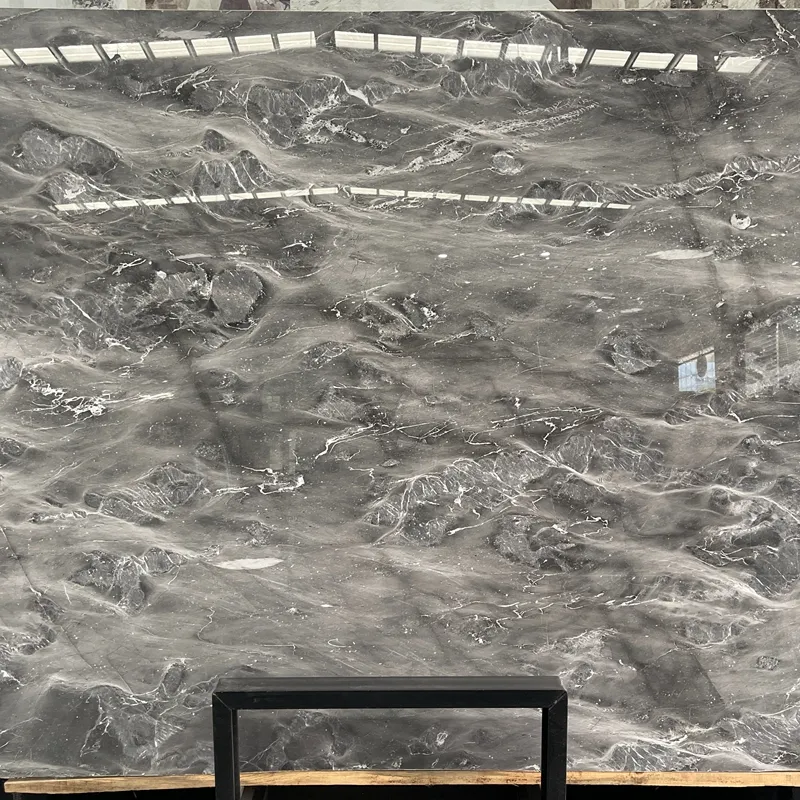
A marble countertop’s dominant vein color reveals its temperature: brown, beige, gold, or cream veins signal warmth; ice-blue, crisp gray, or stark black veins indicate coolness. Lighting affects perception—evaluate the slab under daylight-equivalent LEDs before deciding. Even white marble is rarely neutral: its base may carry a faint yellow (warm) or blue-gray cast (cool). To confirm, hold a plain white sheet of paper beside the slab—if the stone reads creamy, it’s warm; if bluish or silvery, it’s cool. Getting this right early prevents clashing finishes and sets the foundation for cohesive cabinet pairing, as each temperature group responds best to specific supporting colors and wood stains.
Selecting Cabinet Colors That Complement—Not Compete With—Marble Countertop Undertones
Cabinet colors should echo—not overpower—the marble’s subtle temperature cues. Warm-veined marble pairs naturally with off-white, cream, or natural wood cabinets like maple and cherry, reinforcing a sunlit, inviting feel. Cool-veined stones align best with crisp whites, soft grays, or deep blues to sustain a clean, modern edge. Avoid mismatched extremes—like yellow-toned cabinets with gray-veined marble—which disrupt visual harmony. Neutral shaker doors in a balanced greige can bridge both palettes, but always test physical samples against the slab. For intentional contrast, reserve bold choices—such as a stained island—for secondary elements rather than full cabinetry. This preserves the marble’s unique character as the focal point. As confirmed by the National Kitchen & Bath Association’s 2023 market analysis, kitchens with undertone-aligned palettes consistently score higher in perceived value and buyer appeal.
Balance Visual Complexity: Cabinet Design and Marble Countertop Veining Intensity
A kitchen’s design success often hinges on balancing the visual weight of cabinets with the marble countertop’s veining. Too much intricacy on both elements creates clutter; too little looks unfinished. The secret is to let one dominate while the other recedes.
Choosing Cabinet Door Style Based on Marble Countertop Vein Density and Contrast
The cabinet door style directly influences how the marble countertop is perceived. For marble with dense, high-contrast veining—like bold charcoal veins on white—choose simple, flat-panel or slab doors. Their unadorned surfaces prevent competition and let the stone’s drama take center stage. Shaker-style doors offer a versatile middle ground: clean lines suit most marbles, and a polished finish enhances luxury without overwhelming. For marble with subtle, low-contrast veining, more detailed styles—raised-panel, glass-front, or fluted doors—add necessary texture without visual strain. Recessed-panel doors strike balance with moderate vein density. Ornate cabinets suit quiet stones; minimalist cabinets showcase dramatic patterns. Testing combinations with physical samples remains the most reliable way to ensure cohesion.
Harmonize Surface Finishes: Honed or Polished Marble Countertop With Cabinet Sheen
The sheen level of a surface determines how it interacts with light and touch—making it a critical bridge between marble countertop and surrounding cabinets. A consistent dialogue between these finishes creates intentionality; mismatched sheens risk a disjointed impression. The goal is to select a cabinet sheen that either echoes the countertop’s texture or provides a thoughtful, contrasting element—without introducing visual noise.
Polished Marble Countertop Paired With Glossy or Semi-Gloss Cabinets
Polished marble delivers a high-gloss, reflective surface that intensifies veining and color depth, acting as a luminous focal point. Pairing it with glossy or semi-gloss cabinets amplifies this effect, creating a seamless, high-end aesthetic. The shared reflectivity generates a continuous visual flow—expanding the sense of space and brightness—ideal for formal, sophisticated environments. Note that both surfaces show fingerprints and smudges more readily, requiring slightly more frequent cleaning.
Honed Marble Countertop and Matte or Textured Cabinet Finishes
Honed marble offers a soft, matte, non-reflective surface with a velvety tactile quality. It absorbs light gently, naturally concealing minor scratches, etching, and daily wear—making it especially practical for high-traffic kitchens. This understated elegance calls for cabinets with matte or textured finishes (e.g., brushed wood, limewash, or fluted MDF) to reinforce cohesion and warmth. The result is a modern yet timeless ambiance—refined without being clinical. For deeper insight into how surface textures influence durability and perception in kitchen design, the 2024 Material Flexibility Study outlines evidence-based considerations across real-world applications.
Leverage Strategic Contrast for Modern Marble Countertop Impact
Strategic contrast transforms a marble countertop from a functional surface into a deliberate design statement. Thoughtful opposites—in color, texture, or cabinet detailing—create energizing visual tension appropriate for contemporary spaces. Dark, heavily veined marble against bright white cabinetry delivers crisp confidence; lightly veined marble gains presence beside cabinets in a bold matte finish. Texture adds nuance: a polished marble countertop gains dimension beside a rough-hewn island or fluted cabinet fronts—introducing tactile variety without clutter. The key is hierarchy: let the marble’s natural pattern dominate, then support it with simpler, tonally opposite elements. Even in minimalist schemes, a single strong juxtaposition—like a waterfall marble countertop paired with stained wood lower cabinets—immediately elevates sophistication and spatial clarity.
FAQ Section
- How do I determine the undertones of my marble countertop? Hold a plain white sheet of paper beside the slab to identify if the stone reads creamy (warm) or bluish/silvery (cool).
- What cabinet colors work best with warm-veined marble? Off-white, cream, or natural wood cabinets like maple and cherry complement warm-veined marble.
- Can I mix warm and cool tones in my kitchen design? It’s best to avoid clashing extremes like yellow-toned cabinets with gray-veined marble for visual harmony.
- How do polished and honed finishes affect kitchen design? Polished marble offers high-gloss elegance, while honed marble provides a soft, matte texture better suited for high-traffic areas.
- What cabinet door styles suit heavily veined marble? Simple flat-panel or slab doors work best to avoid competing with bold marble veining.