 EN
EN

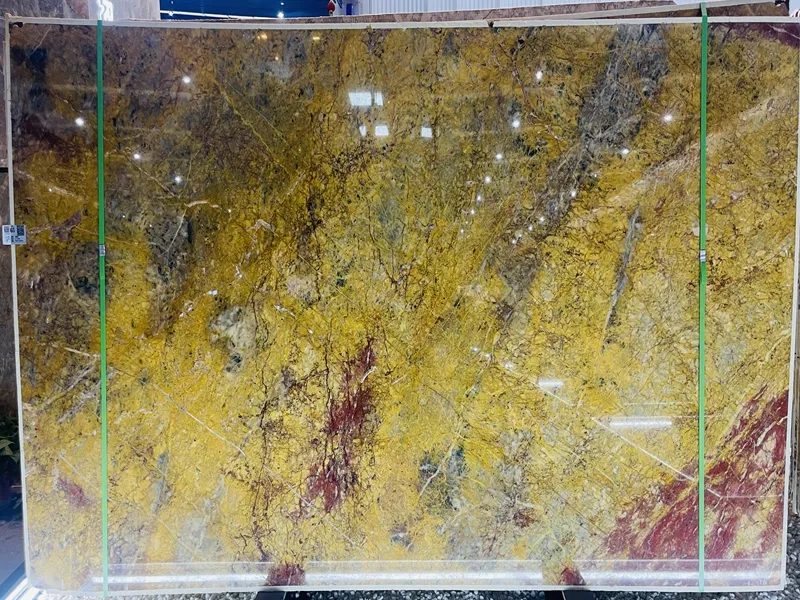
Technical Quality Assurance: Verifying Marble Integrity from Quarry to Cut
Surface integrity, edge precision, and thickness tolerance (±0.5mm per EN 1469)
A dependable marble supplier begins quality assurance at the raw block stage. Surface integrity is verified by inspecting slabs for natural veining that does not compromise structural strength—and by tapping the stone with a small hammer: a clear, resonant sound indicates internal solidity, while a dull thud signals hidden cracks that may propagate during cutting or installation. Edge precision relies on advanced CNC waterjet or diamond wire saws, which deliver clean, chip-free profiles without micro-fractures. Per EN 1469, thickness must remain within ±0.5 mm across the entire slab—a critical tolerance for seamless floor and wall cladding layouts. Maintaining this standard prevents lippage, eliminates rework, and ensures consistent grout joint alignment. Regular calibration of cutting machinery—and timely replacement of diamond blades—further safeguards dimensional accuracy. For large-volume orders, pre-production sample checks against approved control samples verify surface finish and dimensional conformity before full production begins, significantly reducing jobsite delays.
ASTM C503 and EN 1469 compliance: Preventing warping, efflorescence, and batch inconsistency
Compliance with ASTM C503 and EN 1469 reflects a supplier’s technical rigor—not just as a checkbox, but as an integrated part of their production discipline. ASTM C503 classifies dimension marble by key physical properties—including absorption rate, density, and flexural strength—which directly influence resistance to warping. Warping typically stems from uneven moisture release during fabrication; compliant suppliers mitigate this through controlled drying environments and flat-storage protocols. Efflorescence—the white, powdery salt deposit on surfaces—is addressed proactively via petrographic analysis to identify reactive minerals, followed by appropriate pre-shipment sealing. Batch inconsistency is minimized when the same ASTM C503 testing protocol is applied uniformly across every production run, while EN 1469 mandates rigorous geometric verification (e.g., flatness, squareness, thickness). Without consistent adherence to both standards, projects risk color variation, thickness drift, and undetected flaws between shipments—eroding timelines and increasing remediation costs. Procurement teams should verify documented evidence of ongoing compliance—not just certification—but active implementation in daily quality control.
Operational Reliability: Assessing Lead Time Accuracy and Logistics Capacity
Operational reliability separates dependable marble suppliers from those that disrupt project schedules. Product quality matters little if delivery fails to align with installation sequencing, inventory planning, or budget cycles. Evaluating lead time accuracy requires moving beyond sales promises to assess the physical and administrative systems that govern shipment execution.
Validating promised lead times with factory audit checkpoints: container loading, customs readiness, and traceability systems
Credible suppliers welcome scrutiny at three operational checkpoints. First, container loading audits confirm that finished slabs match order specifications exactly—and that packaging (e.g., plywood crating, edge protectors, interleaving) prevents transit damage. A signed loading checklist, jointly completed by QC and logistics staff, serves as objective proof of compliance. Second, customs readiness—reflected in complete, error-free documentation (commercial invoices, packing lists, certificates of origin, and ASTM/EN test reports)—is a strong predictor of border clearance efficiency and avoids costly demurrage. Third, modern traceability systems—such as barcode- or RFID-tagged crates linked to a secure digital platform—provide real-time location tracking and auditable chain-of-custody records. Prospective buyers should request a live walkthrough of these systems during a factory visit. Suppliers unable to demonstrate structured processes for container documentation or customs preparation are high-risk—even with otherwise excellent product quality.
Supplier Responsiveness and Technical Support: Beyond Sales Promises
In marble procurement, technical responsiveness often determines whether a project runs smoothly—or stalls over avoidable issues. A supplier who fulfills orders without offering guidance leaves designers, contractors, and installers exposed to material misapplication, compatibility failures, and costly field corrections. Genuine partnership is defined not by marketing claims, but by accessible expertise and collaborative problem-solving.
Red flags in marble supplier service: No in-house technical advisory team or restricted third-party inspection access
The absence of an in-house technical advisory team—comprising geologists, materials engineers, or certified stone specialists—is a critical red flag. Without such expertise, suppliers cannot advise on optimal marble selection for specific applications (e.g., wet areas vs. high-traffic floors), recommend compatible adhesives or sealers, or troubleshoot common issues like staining, thermal cracking, or lippage. This gap frequently results in on-site errors and expensive rework. Equally concerning is restricted access for third-party inspections. A reliable supplier actively encourages independent verification—before shipment—to validate grade, finish, and tolerances against agreed specifications. Refusal or delay in granting inspection access often masks inconsistent batching, inadequate processing controls, or nonconforming material. Transparent communication about quarry origins, processing methods, and treatment history further distinguishes responsive partners. As a 2023 industry survey revealed, delayed supplier responses contributed to 68% of avoidable project delays—underscoring why fast, informed technical support is not a luxury, but a necessity.
After-Sales Partnership: Measuring Accountability Through SLAs and Resolution Performance
ISO 9001 certification confirms a supplier’s commitment to process consistency—but it says nothing about how they respond when things go wrong. Without enforceable Service Level Agreements (SLAs), accountability remains aspirational rather than actionable.
Why ISO 9001 alone is insufficient — the critical role of documented SLAs in reducing resolution time by 40%
ISO 9001 governs how quality is managed—not how quickly problems are resolved. A supplier may hold certification yet take weeks to investigate a cracked slab or address a batch-wide color mismatch. SLAs transform vague assurances into measurable, enforceable commitments—specifying first response time, root-cause investigation deadlines, resolution windows, and escalation paths. According to a 2023 service management benchmark, organizations with formal SLAs resolve marble-related claims 40% faster than those relying solely on ISO 9001. For example, a robust SLA might require a preliminary damage assessment within 48 hours and a full corrective action plan—including replacement logistics—within five business days. It should also define financial remedies for missed commitments and mandate quarterly performance reviews to adapt terms as project complexity evolves. Embedding these metrics shifts procurement from passive acceptance to proactive partnership—ensuring accountability, protecting timelines, and preserving long-term stone integrity.
FAQ
Why is surface integrity important when assessing marble quality?
Surface integrity ensures that the marble is free from hidden cracks or flaws, providing structural stability and an aesthetically pleasing finish.
What does compliance with ASTM C503 and EN 1469 mean?
It ensures that the marble meets industry standards for physical properties like absorption rate and thickness, preventing issues like warping and batch inconsistencies.
How can lead time accuracy improve project schedules?
Accurate lead times ensure marble delivery aligns with construction timelines, minimizing delays and logistical disruptions.
Why is third-party inspection access critical?
It offers transparency and ensures the marble meets agreed specifications for grade, finish, and dimensions, reducing risks of defects upon delivery.
What are Service Level Agreements (SLAs) in marble procurement?
SLAs are enforceable commitments that define response times and resolutions for issues, ensuring accountability and faster problem-solving.
Table of Contents
- Technical Quality Assurance: Verifying Marble Integrity from Quarry to Cut
- Operational Reliability: Assessing Lead Time Accuracy and Logistics Capacity
- Supplier Responsiveness and Technical Support: Beyond Sales Promises
- After-Sales Partnership: Measuring Accountability Through SLAs and Resolution Performance
- FAQ