 EN

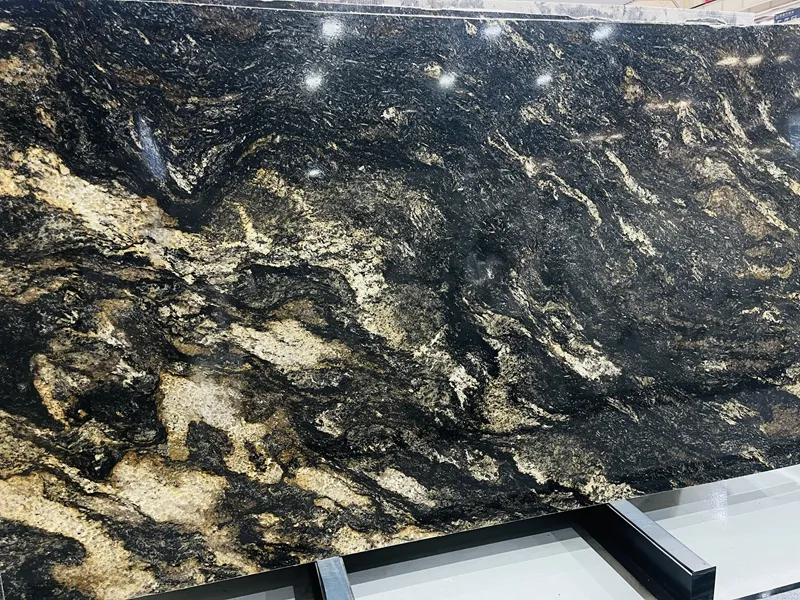
Defining and Enforcing Stone-Specific Quality Standards
Setting measurable parameters: color consistency, grain uniformity, and dimensional tolerances per stone type
Every stone supplier must translate subjective visual appeal into objective, quantifiable metrics to eliminate ambiguity and ensure batch-to-batch repeatability. For color consistency, a Delta E tolerance—typically ≤2 for premium marble and ≤3 for granite—is specified using spectrophotometric readings taken under controlled lighting, preventing perceptual drift. Grain uniformity is assessed via digital image analysis of pattern density, vein width, and crystal orientation; for instance, “uniform grain” may be defined as texture variation within ±15% in area fraction. Dimensional tolerances are equally critical: slab thickness is commonly held to ±1 mm, flatness to 0.5 mm per linear meter, and cut-to-size tile dimensions to ±0.5 mm. These parameters are not universal but tailored to stone type—stringent for translucent onyx, where internal veining distorts perception, and slightly relaxed for rugged quartzite, where natural cleft defines the aesthetic. Formalizing such criteria in a stone supplier’s quality plan turns craftsmanship into consistent industrial output.
Embedding international standards (ASTM C503, EN 12440, ISO 10545) into stone supplier contracts and SLAs
A robust quality framework requires anchoring to recognized international standards within binding agreements. ASTM C503 specifies physical and mechanical requirements for dimension stone—including compressive strength, water absorption, and flexural modulus—providing a benchmark that a stone supplier’s products must meet or exceed. EN 12440 standardizes the characterization of natural stone, ensuring consistent terminology for trade names and petrographic families, which is essential for global sourcing alignment. Though designed for ceramics, ISO 10545 offers adaptable test methods—such as water absorption, breaking strength, and thermal shock—for thin-cut stone veneers, increasingly adopted by leading suppliers as supplementary quality gates. Contracts embed these standards by referencing specific test methods, defining pass/fail limits, and linking Service Level Agreements to penalty clauses for non-conformance. For example, an SLA may require random sampling per ASTM C503 with a 98% pass rate; any failure triggers root-cause analysis and a reduction in the supplier’s performance scorecard. This integration transforms voluntary standards into enforceable obligations, directly tying accountability to measurable deliverables.
Rigorous Stone Supplier Qualification and Field Audits
Pre-qualification: verifying quarry ownership, geological stability data, and historical slab yield reliability
Effective pre-qualification begins with documented proof of quarry ownership or long-term extraction rights—verified through cadastral maps, mining licenses, and lease agreements. Third-party geological stability reports assess fracture density, weathering profiles, and bedding plane orientation, all of which directly impact dimensional yield and waste rates. Equally important is historical slab yield data across multiple seasons, showing recovery percentage per block, block-to-slab conversion efficiency, and color consistency rates. Projects that skip this stage often face mid-contract material substitutions when quarries encounter unexpected depletion zones. As noted in the LITOS 2024 procurement framework for mega-projects, only suppliers with verified geological continuity and multi-year yield records meaningfully reduce production risk and cost variance. Cross-checking documents against satellite imagery and public mining registries adds further confidence before field visits.
On-site audits: validating batch traceability, equipment calibration, and extraction process controls
On-site audits verify whether documented controls function effectively on the quarry floor. Auditors trace full batch records—from exact extraction face coordinates and blast sequence to primary cutting line—using timestamped chain-of-custody forms. Equipment calibration logs for dimensional saws, wire saws, and resin treatment lines are reviewed against maintenance schedules; deviations from tolerance ranges immediately flag process drift. Extraction process controls receive equal scrutiny: operator adherence to block-separation techniques, water-jet pressures, and crack detection protocols directly influences slab integrity. Auditors also confirm that reject handling procedures keep non-conforming blocks fully segregated from production inventory. When findings reveal inconsistent block numbering or overdue calibrations, the stone supplier must submit a corrective action plan before any lot is accepted. Combined with random sampling of in-process material, these verifications ensure pre-qualification promises translate into consistent, measurable quality at the source.
Incoming Inspection Protocols for Stone Raw Materials
Risk-tiered sampling plans: AQL Level II for granite vs. tightened inspection for translucent onyx
A one-size-fits-all inspection fails when a stone supplier ships both dense granite and fragile onyx. A risk-tiered approach matches sampling rigor to inherent variability and end-use visibility. For standardized materials like granite, an AQL Level II per ISO 2859-1:2012 provides a statistically sound baseline—commonly translating to inspecting ~4% of a lot for dimensional tolerances and color consistency.
Conversely, translucent onyx demands tightened inspection. Its high value and role—as a backlit feature wall—means even hairline fissures constitute critical defects. A smaller AQL (e.g., 1.5% or 2.5%) is enforced, and the sample size for visual checks against the approved control sample is doubled. Every slab undergoes backlighting to reveal internal veining discontinuities invisible under standard lighting—a protocol validated by a 2023 stone industry quality council study that found a 35% reduction in on-site rejections following its implementation.
Digital chain-of-custody: QR-coded batch tags linking quarry GPS, extraction date, and lab test IDs
Raw block authenticity is foundational—and a digital chain-of-custody eliminates opacity from the inspection process. At extraction, a unique QR-coded tag is affixed, logging quarry GPS coordinates, extraction date, and bench location. This tag travels through every stage—block dressing in Italy, slabbing in Spain, final inspection at the distribution hub.
Upon receipt, inspectors scan the code to instantly retrieve the full dossier, including geological stability data and linked lab test IDs for that batch. This system links each physical slab to its digital twin, enabling real-time verification of proclaimed origin—such as Carrara marble—in seconds. It directly addresses the 12% of global stone trade estimated by supply chain integrity reports to involve some form of misrepresentation. As detailed in the 2024 Guide to Stone Quality Assurance, this traceability is pivotal in preventing material substitution and enforcing specification compliance.
Testing, Traceability, and Corrective Action for Non-Conforming Stone Lots
Leading stone suppliers employ a closed-loop quality system where advanced testing data directly triggers traceable corrective action, preventing substandard slabs from entering the production chain.
Advanced non-destructive evaluation: ultrasonic velocity mapping + digital image correlation for micro-defect detection
Ultrasonic velocity mapping reveals internal fractures and density variations without cutting the block. A high-frequency pulse transmitted through the stone slows at cracks or inclusions, generating a 2D velocity map that pinpoints flaw locations with sub-millimeter precision. Paired with digital image correlation (DIC)—which tracks surface deformation under controlled load—suppliers assess both internal integrity and near-surface strain accumulation. In field trials, this combined method detected latent micro-cracks invisible to the naked eye, improving batch acceptance accuracy by 28% (Stone Testing Review, 2024). For translucent materials like onyx, backlighting plus DIC highlights stress concentrations that could cause sudden fracturing during fabrication.
CAPA workflow: root-cause analysis, quarantine protocols, and stone supplier performance scorecards
Once a non-conforming lot is identified, the Corrective and Preventive Action (CAPA) process activates immediately. Quarantine protocols isolate affected slabs, and root-cause analysis traces the defect to its origin—whether at the quarry face, during block sawing, or from inconsistent finishing. Findings are logged into a central system, and corrective actions—such as recalibrating extraction equipment or retraining operators—are deployed. A serial number–based traceability system ensures every slab can be linked to its origin date and processing stage. To monitor quality over time, each stone supplier receives a dynamic performance scorecard tracking defect frequency, response time, and recurrence rate—enabling data-driven sourcing decisions and continuous improvement across the supply chain.
Frequently Asked Questions
Why is standardizing stone quality important?
Standardizing stone quality helps ensure consistent visual appeal and structural integrity across batches, improving customer satisfaction and minimizing defects.
What does Delta E tolerance mean in stone quality?
Delta E is a metric used to assess color consistency. A smaller Delta E value indicates greater color uniformity, which is vital for materials like marble and granite.
Why are international standards like ASTM C503 and EN 12440 used?
These standards establish uniform testing methods, physical requirements, and terminology, ensuring stone quality and facilitating global trade compliance.
What is risk-tiered sampling in stone inspection?
Risk-tiered sampling matches inspection rigor to the material’s variability and purpose, applying stricter protocols to fragile, high-value stones like translucent onyx.
How does digital chain-of-custody enhance stone traceability?
A digital chain-of-custody documents every stage, from extraction to distribution, ensuring stone authenticity and reducing misrepresentation in the supply chain.